Speaking Technically: Engaging Governments to Improve Nutrition Policies
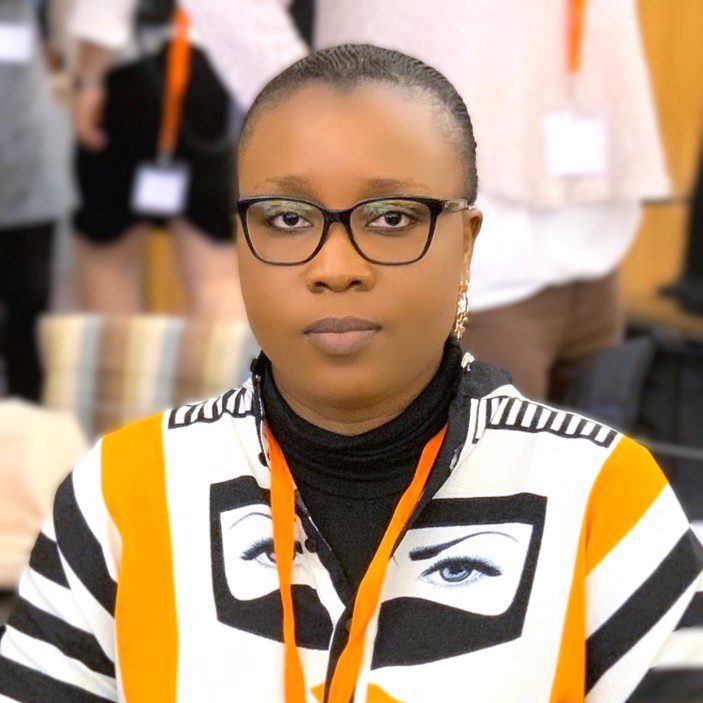
Ndèye Yaga Sy is our Nutrition Policy and Advocacy Advisor based in Dakar, Senegal. She supports Helen Keller Intl’s work engaging with the Senegalese government to strengthen policies that support better nutrition and health for children and families.
We recently spoke with her about how nutrition policies help combat malnutrition and the importance of our government partnerships.
What are some of Senegal’s recent successes and challenges in supporting good nutrition?
I’m proud to say that nutrition is a key national priority for the government of Senegal. In fact, we’re in the midst of implementing a multi-year, country-wide strategic plan to enhance coordination across sectors and address malnutrition. But we still have a way to go. In Senegal, 10% of children under five suffer from acute malnutrition, 18% are stunted, and 16% are underweight. There are also high rates of anemia among mothers and children under five. That’s why Helen Keller’s interventions focus on regions where we have a high prevalence of stunting and acute malnutrition, to ensure the greatest impact.
Tell us about your advocacy efforts. What is Helen Keller hoping to accomplish in Senegal?
We have three key objectives. The first is domestic resource allocation. National financing for nutrition interventions is so important, especially following the USAID cuts. We need to support and encourage countries to include nutrition funding in their budgets to make our interventions to combat malnutrition more sustainable.
Another focus area for us is strengthening the food system environment by enforcing stricter regulations around the marketing of unhealthy food and beverages, breast milk substitutes, and complementary foods. We’re making progress in this area! After years of advocacy, the Senegalese government recently adopted a decree regulating the marketing of infant foods. This will help safeguard Senegalese children by eliminating the promotion of harmful, unhealthy products.
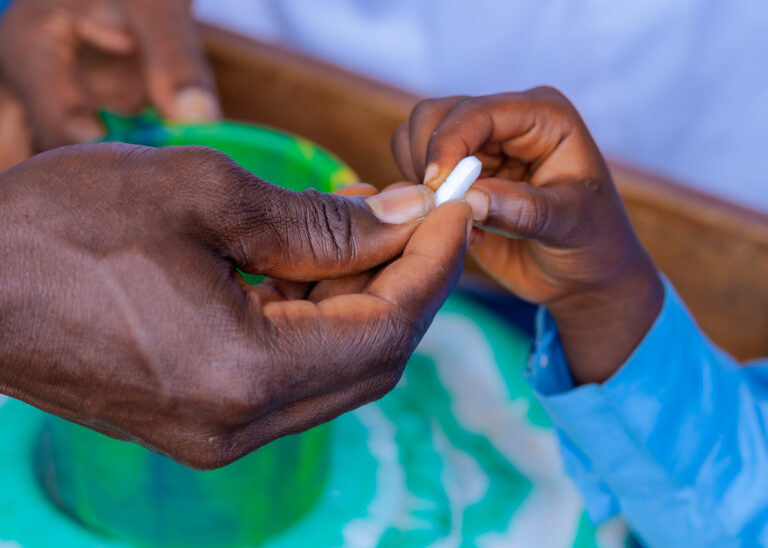
The last goal is to integrate malnutrition treatment products into the national pharmacy supply chain and to increase domestic funding for their purchase to promote greater access. We’re focused on two key products: ready-to-use therapeutic food and vitamin A capsules.
How does expanding access to those products help Senegal combat malnutrition?
As we say, “No product, no program,” and we’re facing frequent product shortages, which makes it challenging to deliver nutrition interventions. It is very difficult for health facilities, especially in remote areas, to access these products. That’s because currently, the only official way to get them into the Senegalese health system is through the support of the UNICEF supply chain and partners.
We’re working to address this by advocating for their integration into our National Pharmacy supply chain, which distributes essential medical supplies to healthcare facilities around the country. This will increase availability and support malnutrition management at the community level, allowing more children to receive life-saving health care closer to home, without needing to travel.
When working with government partners, what is your pitch to convince them that allocating resources for nutrition is necessary?
I put it like this: with good nutrition, the population will be in better health. And a population in better health can better contribute to the development of your country. Nutrition is not just an intervention; it’s a development indicator for countries.
We also share evidence showing the high prevalence of maternal and child deaths due to malnutrition. It is a major public health problem
With good nutrition, the population will be in better health. And a population in better health can better contribute to the development of your country.
Ndèye Yaga Sy
What made you so passionate about nutrition, and what inspired you to pursue this as a career?
I love food, so I love nutrition. But of course, it’s beyond that. When I went abroad for my university studies, I knew I wanted to return to Senegal to contribute to the development of my country and do work that felt impactful.
In school, I studied food science and technology and learned how food products are formulated and developed. I wanted to put that training to good use, and in Senegal, we face real challenges regarding nutrition, education, and health.
Joining Helen Keller was a logical step for me, allowing me to contribute to our noble mission of supporting healthy lives through good nutrition. I like to say that nutrition is your first medicine. It all starts with nutrition. If you have good nutrition, you will likely have good health and the potential to learn, growth and develop.
Why are our partnerships so important?
We all have the same objective: to build a better Senegal, reduce child and maternal mortality, and ensure good nutrition for our population. Helen Keller’s approach is to work with governments and partners at all levels – from the global to the regional to the community level.
We want our interventions to be impactful, but if we work in silos, impact can be slow and our objectives hardly achieved. So, we must join forces to optimize our limited resources and support interventions sustainability.
Fortunately, the Senegalese government works closely with partners on every step of the process, from strategy development to implementation to monitoring and evaluation. We also have strong relationships with government ministries and key international partners like UNICEF, which is crucial for sustainability.
Help ensure good nutrition for all children and families.