Helping Families Treat Malnutrition for Healthier Futures in Kenya
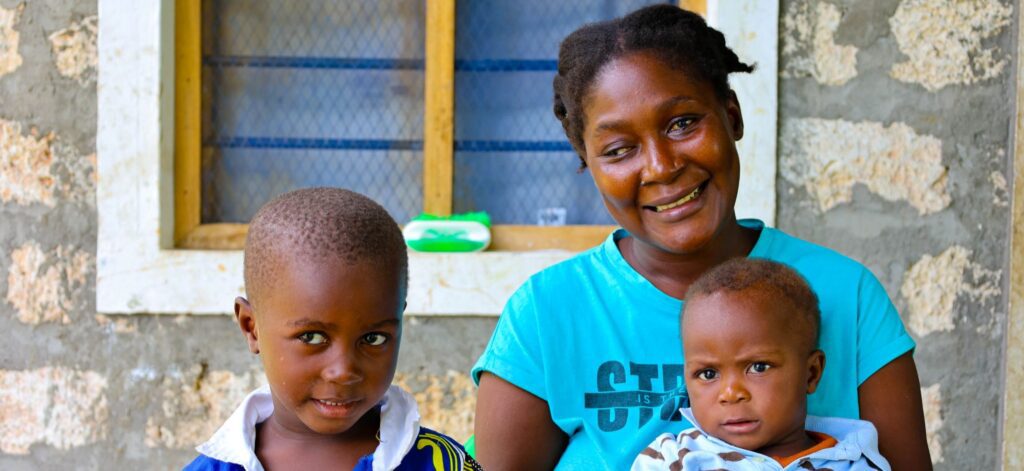
Bendera Kahindi Nyule can often be found arranging fresh, green vegetables at her stall in the local market in Mijomboni village in Kenya’s costal Kilifi County. The 34-year-old mother of three sells vegetables to help support her family while her husband takes on daily wage labor jobs, including scrap work and construction.
Her youngest, Joseph Ushindi, just over a year old, is a curious little boy with wide eyes and a bright smile. But just a few months ago, Bendera was consumed with worry about his health. At only 10 months old, Joseph fell ill with persistent flu. He looked frail, couldn’t stand on his own, and his weight was unstable, which the nurses at his monthly clinic visits noticed.
Bendera recalled that Joseph’s older brother, Abraham, had come down with a similar illness as a toddler. “But Abraham was three at the time,” she says. “Joseph was still breastfeeding. That’s what scared me the most.”
It pained me. I love to see my sons healthy and smiling. But instead, I watched [Joseph] grow weaker.
Bendera Kahindi Nyule
Despite offering him the vegetables she sold at the market, Joseph refused to eat. His appetite was gone. Every meal Bendera prepared was left untouched. “It pained me,” she admits. “I love to see my sons healthy and smiling. But instead, I watched him grow weaker.”
Then she remembered that when Abraham was sick, he received care at a nearby malnutrition treatment center and recovered quickly.
Without hesitation, Bendera took Joseph to the same center where he was quickly diagnosed with moderate acute malnutrition and enrolled in a six-week treatment program.
Improving Malnutrition Treatment in Local Health Systems
Kilifi County has some of the highest rates of child malnutrition in Kenya. About 37 percent of children under five are stunted, or short for their age, and 5 percent are wasted, or severely underweight, the most serious and life-threatening form of malnutrition. However, even moderate forms of malnutrition can have serious, long-term health consequences for children.
Nearly half of child deaths under age five are linked to malnutrition, and being malnourished can significantly increase the risk that a child will die from common childhood illnesses. In Kenya, inflation and climate change are making it increasingly difficult for families to access and buy healthy foods. A lack of understanding of good nutrition for children and limited access to healthcare are also contributing to rates of child malnutrition.
To help address malnutrition, Helen Keller Intl is partnering with Vitamin Angels and iDE for the Transforming Lives through Nutrition consortium, funded by the Church of Jesus Christ of Latter-day Saints. Implemented in 12 countries across Asia and Africa, including Kenya, Transforming Lives aims to improve the health of mothers and children by supporting better nutrition in pregnancy, childhood, and beyond.
The consortium is collaborating with local health systems in Kenya to improve screening and treatment for malnutrition and ensuring ready-to-use therapeutic foods and other nutrient-enriched food supplements reach malnourished children in even the most remote communities. Additionally, they are working with health facilities and communities to provide breastfeeding and nutrition education and support for families to improve child nutrition at home.
From Malnourished to Healthy and Thriving

For six weeks, Bendera fed Joseph ready-to-use supplementary foods, which provided essential vitamins and minerals to help him recover from malnutrition. She also received nutrition counseling and breastfeeding support so she could aid his recovery and provide good nutrition in the long term to help him stay healthy.
“I was also taught about the seven food groups that children need,” Bendera says. “They explained how to mix and change meals, so children don’t lose interest, and reminded me to continue breastfeeding.”
Little by little, Joseph began eating again. His strength returned. At their most recent hospital visit, the numbers on the scale confirmed that Joseph had gained weight. He’s now healthy and thriving.
“Now, when I prepare food, he eats,” Bendera says with relief. “I feel happy. He plays; he smiles. It shows in his body.”
Help ensure healthier good nutrition for all children.