From Hunger to Hope: Unlocking Financial Independence in Bangladesh
“Some mornings we didn’t know if there would be food by nightfall,” recalls 38-year-old Mazeda.
In the quiet corners of Mujib Palli—a government shelter for landless people in the Sunamganj district—every sunrise once brought a new wave of worry. With five children and no land to call her own, Mazeda’s days were consumed by the fight to survive. Her husband, Mirajul, worked tirelessly as a day laborer, while she toiled in the fields, harvesting crops for meager pay. Their combined income was never enough to provide two meals a day for the family. Their children’s school fees were overdue and debt loomed.
In March 2025, Helen Keller Intl brought a glimmer of hope to their village. With support from MetLife Foundation, Helen Keller launched an initiative to support the livelihoods of the families, mostly women, living in poverty in the urban areas. When Mazeda saw her name on the participant list, it felt like a second chance at life. “I couldn’t believe it,” she says. “Someone finally saw our struggle and believed we could do better.”
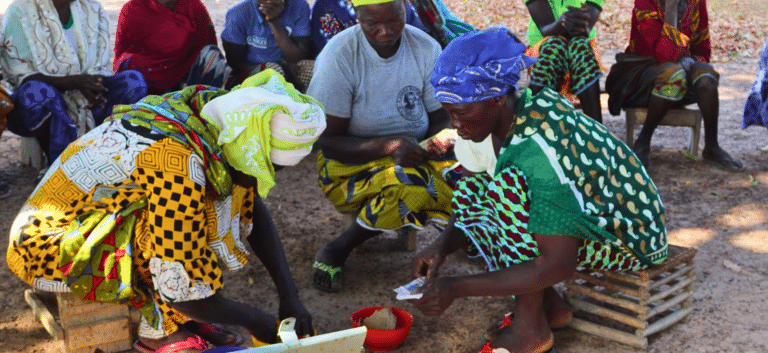
Numerous training sessions taught women about business planning, vegetable cultivation, poultry rearing, and financial management. Each session rekindled Mazeda’s confidence, teaching her that she could do more than survive; she could build something sustainable.
Building Livelihoods for Those in Need
One in six Bangladeshi families experiences high levels of acute food insecurity, a situation where families are facing large food consumption gaps alongside very high rates of acute malnutrition. This number is double the national average in Sunamganj where three in ten families in the district live under these conditions. Households with women as the head of household face even more severe consequences due to fewer opportunities.
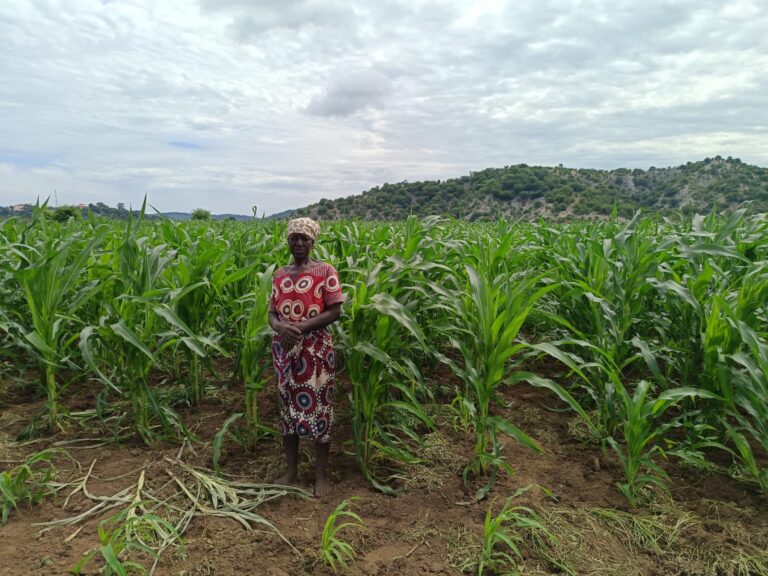
To help increase economic opportunity, Helen Keller has supported 500 women like Mazeda to launch their own businesses such as livestock rearing, tailoring, farming, and retail, providing predictable sources of income for their families. Each participant created a tailored business plan and received technical skill training. Additionally, Helen Keller supported the participants with a one-time cash grant to each family. This helped them to immediately set up and run their businesses.
The changes for the community did not stop there. The participating families established a community savings and loan program to help support each other during hard times. This fund also allows them to take loans from the group savings when needed and allowed individuals to purchase larger expense items that would increase their business’s success.
Today, this initiative has helped over 2,300 family members of the participating women, freeing them from hunger, improving their livelihoods, and giving them hope for their children’s future.
Building a More Sustainable Future
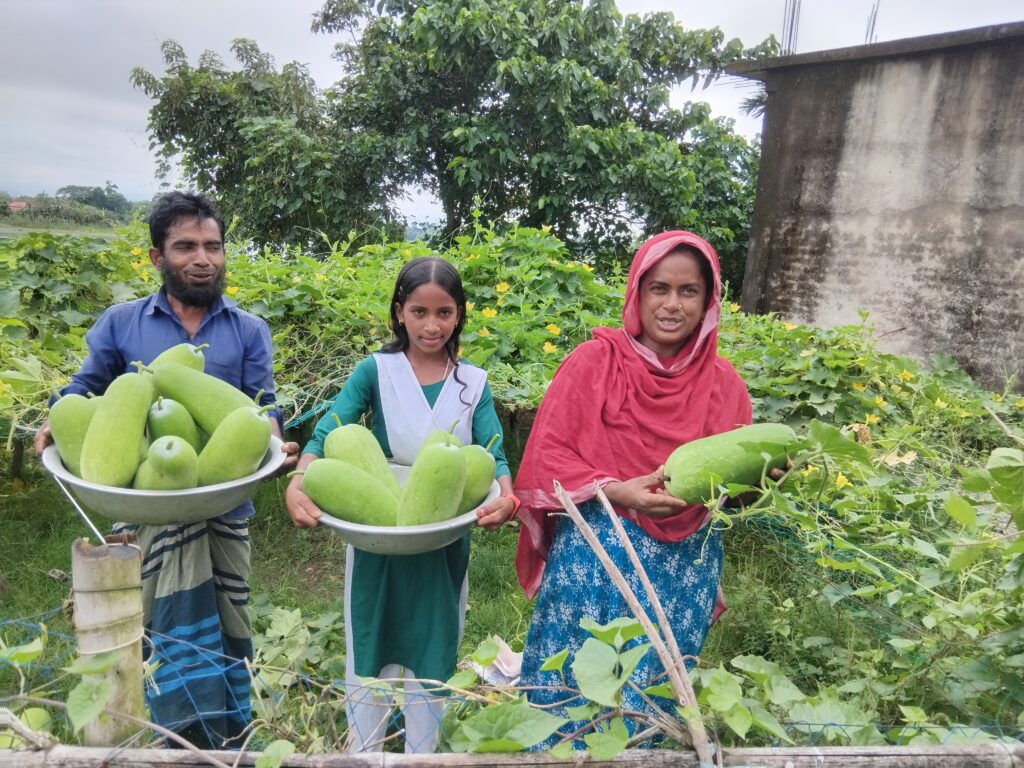
With the cash grant, Mazeda and Mirajul bought a small fishing boat and a net so that Mirajul could catch and sell fish, earning around $7 US a day. They also leased a piece of land for vegetable farming. Mazeda cultivated ash gourd, bitter gourd, and amaranth and sold fresh vegetables in the local market—earning over US$200 in the summer season alone!
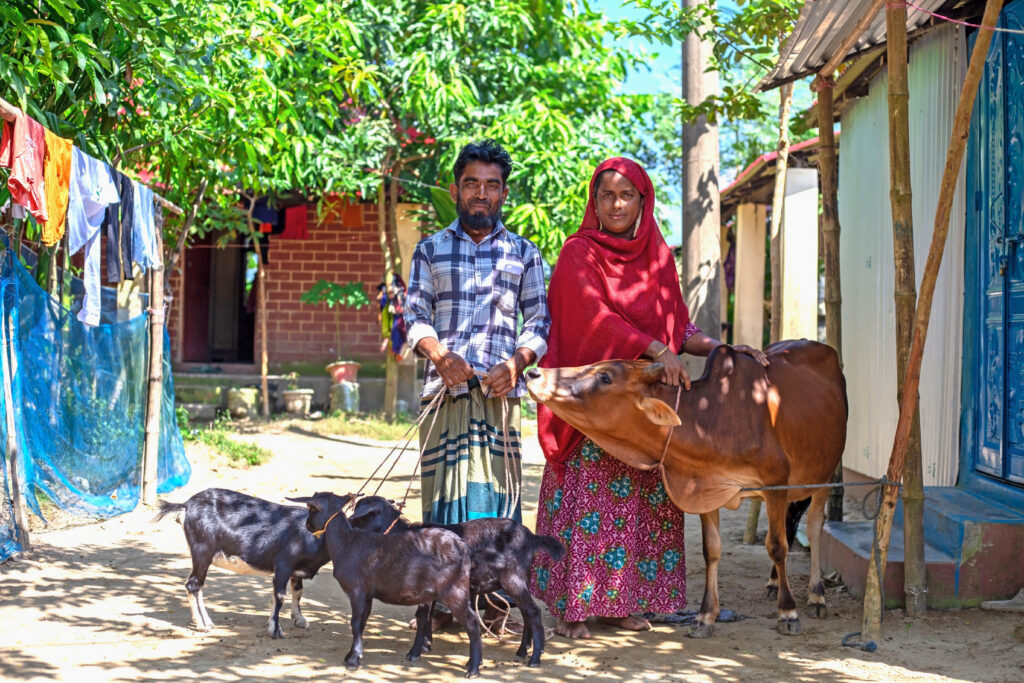
Their monthly income soon increased enough to cover medicine for their family and their children’s schooling. They also saved money and reinvested in purchasing three goats and one calf. Their home, once shadowed by uncertainty, now echoes with laughter and the smell of warm meals. “Now, I can sleep peacefully,” Mazeda smiles.
“My children are fed, studying, and dreaming of brighter futures.”
Mazeda has started saving money in the savings group, facilitated by Helen Keller. She plans to reinvest her savings in poultry and goat rearing, utilizing the improved techniques she learned in the training. Her goal is to make her household economically independent and to ensure her children never have to live the life of uncertainty she once did.
“I am doing very well now, living comfortably with my children. There’s no struggle to pay for their education anymore,” Mazeda shares proudly.
Help families fight persistent poverty and create a better world for everyone.