Timely Diagnosis and Treatment Helps Sisters Recover from Malnutrition
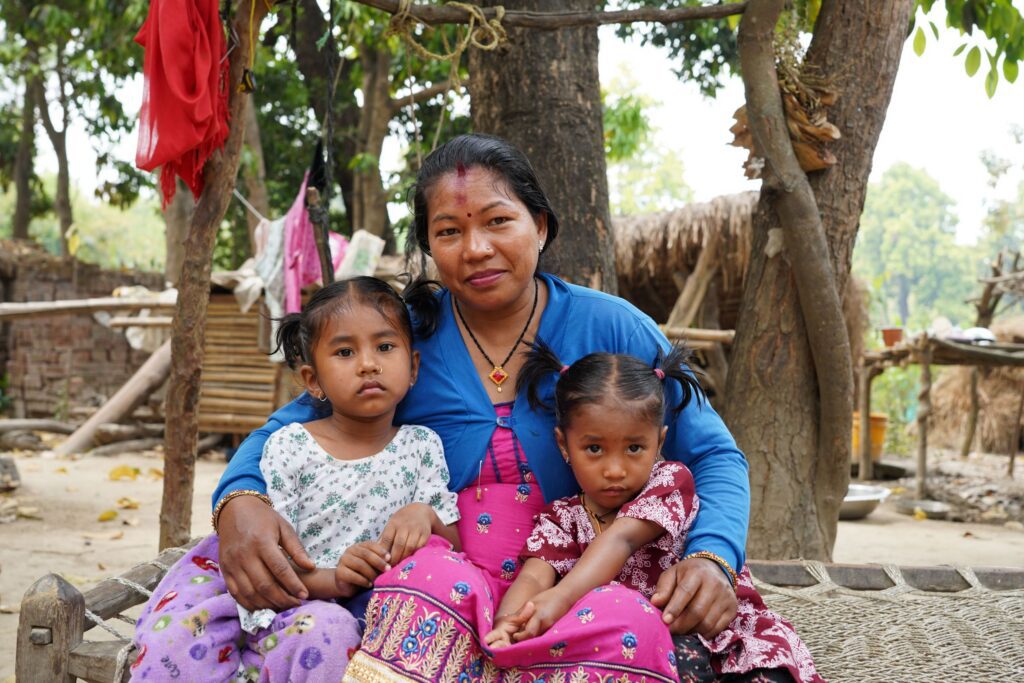
“I have only two daughters. I was heartbroken when I learned that both were malnourished,” says Sita, a 30-year-old woman from Bardiya District in Nepal’s Lumbini Province.
Sita takes care of her two children while her husband, a mason, travels from town to town seeking temporary employment. Since a small patch of land she owns and farms does not yield enough food to feed the family year-round, Sita occasionally takes labor jobs in farming in neighboring communities. Her only worry was that both of her daughters had very low appetites.
During a routine visit to a nearby health facility about a year ago, health workers identified her younger daughter, Riya, then two years old, as underweight. The health workers counseled Sita to feed her daughters nutritious food more often and sent them home without any treatment.
Sita did her best to follow the health worker’s advice despite the family’s challenges accessing enough nutritious food. Then, a few months ago, a team of Helen Keller Intl staff and local health workers conducting a malnutrition screening at the local pre-school identified Sirisha, now four years old, as severely malnourished, a form of undernutrition with life-threatening consequences.
After learning that Sirisha had a younger sister, the team conducted a home visit during which Riya, was also identified as having moderate malnutrition. Sita was devastated.
Fighting the Child Malnutrition Crisis in Nepal
In Nepal, one in ten children suffers from wasting, the most severe form of malnutrition. Wasting is a threat to children’s immediate survival, with potential lifelong consequences hindering their opportunity for a healthy life. Yet with timely diagnosis and treatment, most malnourished children can thrive again.
Helen Keller has become a trusted partner of the government of Nepal and communities in the fight against this malady, which disproportionately affects those earning a low income or in remote parts of the country. Until last year, Helen Keller was working across nearly two-thirds of the country’s 77 districts. The sudden cuts in US government assistance in early 2025 heavily curtailed Helen Keller’s ability to reach children and families at greatest need.
However, Sita lives in one of the nine districts where Helen Keller has been able to resume the work, and her children were able to get help on time. Thanks to the extraordinary generosity of our donor community, and the donor mobilization efforts of Project Resource Optimization, we’ve been able to temporarily restart life-saving interventions in nine Nepali districts with the highest number of children suffering from malnutrition.
Thriving Again
Health workers quickly referred Sirisha to a nearby health facility for treatment, which included a special, nutrient-rich therapeutic food, commonly referred to as Plumpy’nut.
Riya received Super Cereal Plus, a fortified, nutrient-dense wheat-soya blend designed primarily as a food aid to treat malnutrition in young children. With regular home follow-ups from Helen Keller staff and health facility visits, both girls are now on their way to recovery.
Sita understands the importance of receiving the right support at the right time. “Had they not been timely screened, I would never have known that they were malnourished. I think they would become weaker throughout their life,” reflects Sita.
Nevertheless, this was an arduous journey for her. She had to give up the seasonal farming jobs during the pick harvest season. The follow-up routine was different for both daughters, so she had to take either of them to the local health facility almost every week.
Now, Sita is relieved, “I feel happy that my daughters are doing well. The elder one [who was severely malnourished] is fully recovered. The younger one is also on her way to recovery.”
Riya and Sirisha’s recovery was made possible by the generosity of our Helen Keller community, who stepped up in a time of great need and uncertainty. While this funding has provided a grace period to restart critical health and nutrition work, it is not an enduring solution. Your ongoing support is more important than ever to build a new, healthier future for all children and families.
Help us continue to provide lifesaving health and nutrition services.