School Gardens Fortify Children’s Diets and Futures
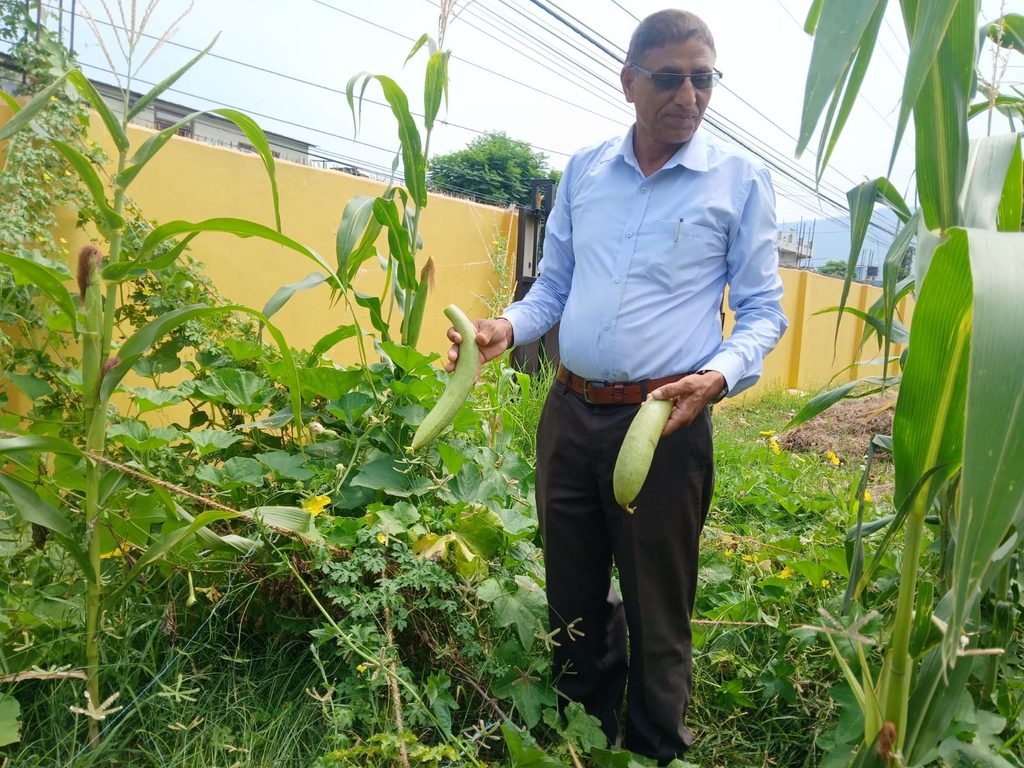
A school in Nepal’s Lumbini province has transformed an empty patch of land into a blossoming vegetable garden and a practical field school for students. The garden provides students with healthy produce for school meals and an opportunity for hands-on learning, nourishing both their bodies and minds.
“This [school kitchen garden] effectively bridges the gap between theory and practice. Students gain knowledge that positively influences their behavior at home and creates meaningful learning,” says Somnath Adhikari, principal of the school.
Nepal’s Lumbini province is considered the ‘grain basket’, contributing a quarter of the country’s wheat production and over a fifth of the rice production. Yet over one in three adolescent girls is underweight, which is a third above the national average. Similarly, a recent screening of the children showed that Lumbini had the third-highest rate of child undernutrition among Nepal’s seven provinces. Helen Keller Intl is partnering with local governments in four high-burden districts to improve the nutrition of school children so they can thrive and realize their full potential.
Fortifying Mid-day Meals for Elementary School Children
Nepal provides midday meals for children at the elementary level in all government-owned schools. The purpose is twofold – to provide a nutrient-rich meal and encourage their regular school attendance. Most families in Nepal live on two main meals. For many families living in poverty, managing an extra midday meal for their school-going children is a luxury. The government launched the school midday meal program to offset some of the burden on these families. These meals, now reaching 3 million children, have proven effective in improving student attendance and enrollment.
While visiting schools in Nawalparasi district, Helen Keller staff observed that school midday meals relied heavily on low-nutrient foods, insufficient to meet the dietary needs of growing children. They also lacked vital micronutrients.
Then, Helen Keller, as part of the Transforming Lives through Nutrition consortium, along with Vitamin Angels and iDE, worked with local government representatives to identify a model to enrich midday meals that schools could follow and sustain through their own resources. The partners developed a locally adaptable school agri-garden model, and Adhikari’s school became the first in Bardaghat municipality to begin planting its own garden.
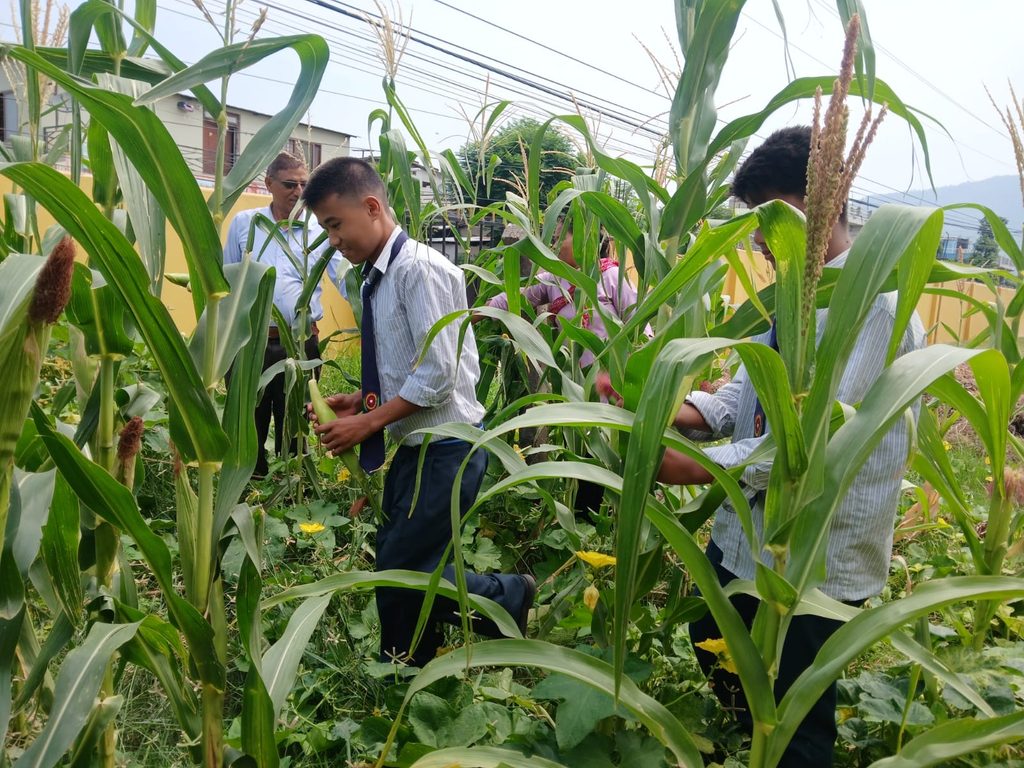
After engaging with the principal, school management committee, and teachers, a dedicated plot of land within the school was allocated for the garden. Teachers and students worked together to clear what was once a dumping site, transforming it into a fertile garden. While Helen Keller provided training on farming techniques as well as seeds and farming equipment, the true transformation came from the dedication of the school community.
From the School Garden to the Kitchen
The students did not just plant seeds; they nurtured them with a deep sense of ownership. The school now hosts a blossoming kitchen garden, providing organic, nutritious vegetables that enrich students’ mid-day meals with vital nutrients.
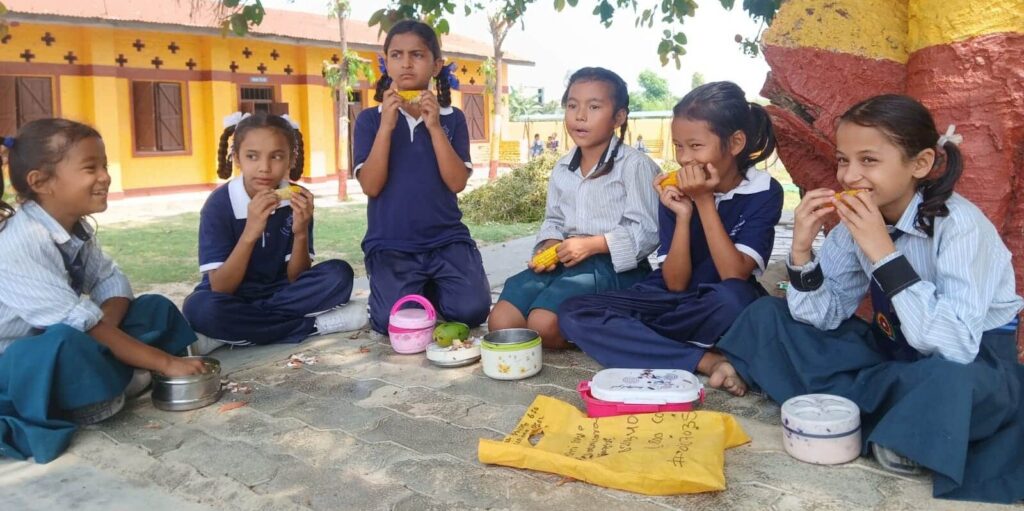
They are now harvesting bitter gourds, bottle gourds, pumpkins, cabbage, radishes, tomatoes, and cucumbers. The students are also growing corn, suitable for the monsoon season. Imagine harvesting fresh corn from the garden, boiling it, mixing it with vegetables, and adding an egg for students’ midday meal.
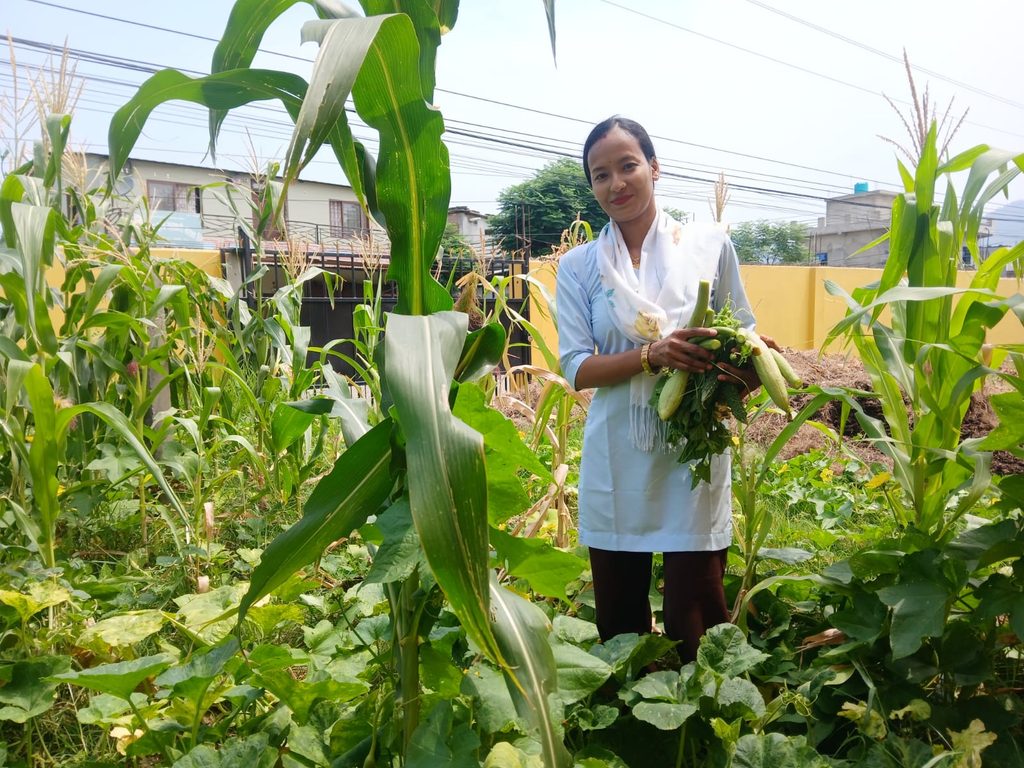
Students express immense joy as they witness the cycle of a plant’s life from seed germination to the harvesting of fresh vegetables for their own plates. Ashish GC, an eighth grader, says, “Cultivating vegetables with my own hands and harvesting after a few days has been a practical life lesson for me. I am committed to making a similar kitchen garden at my home for my entire family’s nutrition.”
Helen Keller continues to engage with children through monthly nutritional sessions for older students in grades eight to ten. The results are clear, as nearly 400 children are gaining hands-on agricultural and life skills.
Tenth-grader Sundar applauded the initiative for sharpening his knowledge and skills on farming and for persuading children to make healthy food choices.
Looking ahead, Principal Adhikari and the school management plan to provide vegetable saplings so that the students can produce nutritious vegetables in their own kitchen gardens. This will mean the children can eat healthy, nutritious vegetables at home and at school.
Help us give children a healthier and thriving future!