Climate-Smart Agriculture Transforms a Farmer’s Future in Mozambique
In Cangudzi, in Mozambique’s Marara district, farming has always required resilience. For years, Joana planted maize using local seed varieties passed down through generations. Like many farmers in the area, she depended on increasingly unpredictable rainfall to feed her family.
Recurring droughts, poor harvests, and rising temperatures made it difficult to produce enough food for household consumption, let alone generate income. Each growing season felt uncertain, and the possibility of crop failure was a constant source of worry.
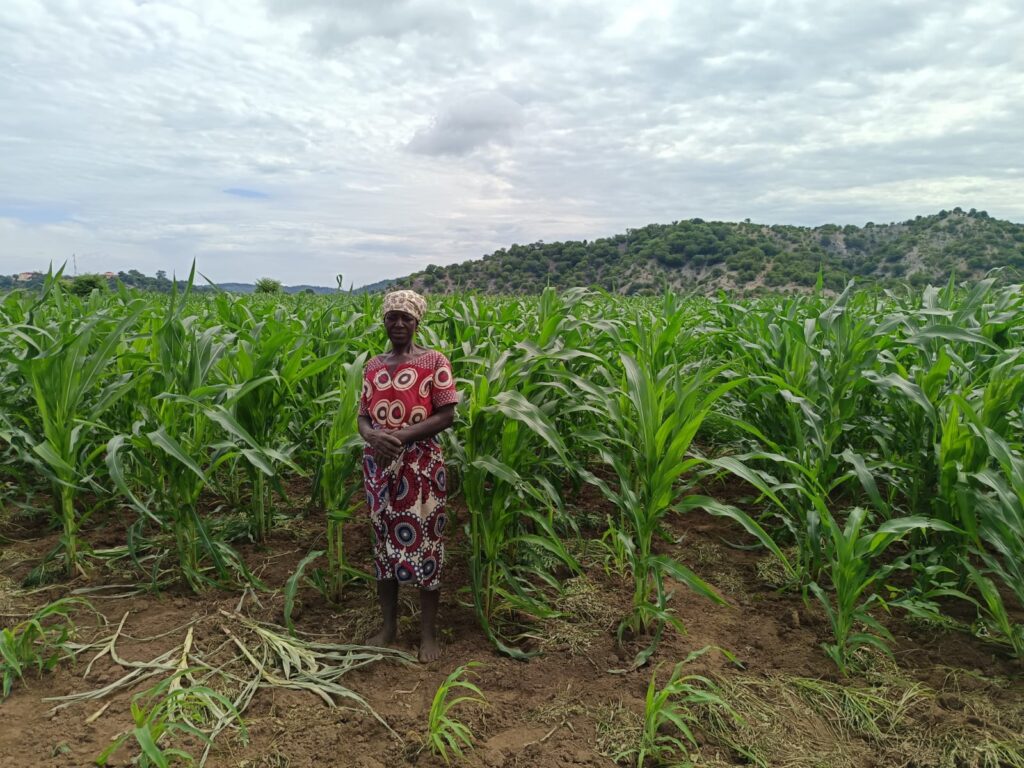
Today, Joana’s fields tell a different story. Rows of healthy maize stand tall against the dry landscape, while thriving cowpea plants cover the ground beneath them. What was once a struggle for survival has become a source of hope, food security, and income for her family.
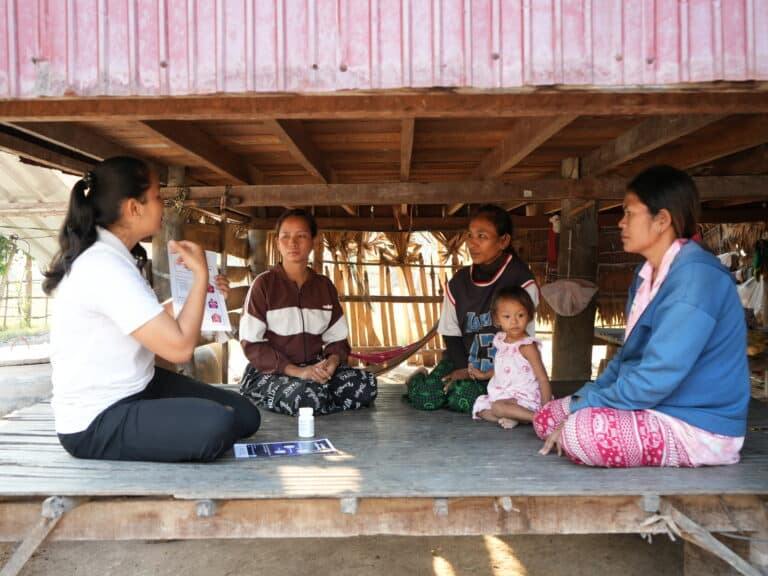
Last year, Joana joined a group of farmers for training organized by Helen Keller Intl. There, she learned climate-smart agriculture practices designed to help farmers adapt to changing weather patterns while improving productivity and soil health.
Empowered with new knowledge and skills, Joana adopted several new techniques on her 1.5-hectare plot. She began producing organic compost to enrich the soil. This will also increase the soil’s ability to retain moisture. She also practiced minimum tillage, preparing planting holes while leaving the rest of the land undisturbed and covered with crop residues from the previous season. This protective layer helps reduce evaporation, improve water infiltration, and shield the soil from intense heat.
She also adopted a different maize variety provided by Helen Keller. This new variety matures quickly and is better able to withstand periods of drought. Alongside the maize, she also planted cowpeas, a resilient and nutrient-rich legume. In addition to providing food and income, cowpeas help replenish soil fertility by fixing nitrogen naturally.
Responding to Food Insecurity and Malnutrition Threats
Joana’s experience reflects broader challenges facing farming families across Mozambique. Food insecurity remains widespread – over 50% of the population cannot afford a nutritious diet. As a result, more than one in three children under five are stunted, short for their age.
Increasingly extreme weather continues to threaten agricultural production through more frequent droughts, flooding, soil degradation, and erratic rainfall patterns. When crops fail, families often struggle to meet their food needs and may be unable to afford a nutritious diet.
Benefits of Adopting Climate-smart Farming Practices
Climate-smart agriculture offers practical solutions to these challenges by helping farmers increase productivity, conserve natural resources, and build resilience to climate shocks. For Joana, the benefits extend beyond higher crop yields.
The combination of climate-smart practices has worked in her favor on multiple levels. The maize, with its short growing cycle, has outrun the worst of the dry weather. The cowpeas are a fast-maturing, nutritious addition to her family’s diet, and the excess can be sold at the local market. The organic matter she has added to the soil means she has spent less on expensive fertilizers.
“I cannot believe the difference,” Joana says with excitement and hope. “In the past, by now I would be worrying about how to feed my children. Now, I am planning for a new roof!”
Joana is one of thousands of farmers benefiting from Helen Keller’s efforts to strengthen food security and nutrition in Mozambique. Thanks to support from the Church of Latter-day Saints, Helen Keller trained nearly 10,000 farmers in the Muanza, Nhamatanda, and Marara districts in nutrition, hygiene, and climate-smart agricultural practices last year.
Help women like Joana cultivate brighter futures for their families.