Speaking Technically: The Small but Mighty Vitamin Saving Lives and Protecting Sight
Based in Dakar, Senegal, Fatou Ndiaye leads Helen Keller’s vitamin A program, supporting our teams and partners to reach tens of millions of children across 14 countries in Africa every year. We recently spoke with Fatou about what makes this small, but mighty public health intervention so powerful.

Vitamin A supplementation has been a go-to public health intervention for decades. What makes it so popular and effective?
Vitamin A supplementation combines three things that are rare in public health: it is simple, affordable, and lifesaving. A small capsule delivered twice a year to children until age five can protect eyesight, strengthen immunity, and reduce the risk of severe illness and death.
It is powerful because it addresses a hidden vulnerability. A child may not look sick, but vitamin A deficiency weakens their immune system, making illnesses like measles and diarrhea far more dangerous. Restoring vitamin A levels gives children a stronger chance to survive and thrive.
It can also be delivered at scale. It requires no complex equipment and can be safely administered by trained frontline workers as part of existing child health services.
For Helen Keller, vitamin A supplementation is also part of our history and identity. Our teams support governments to reach millions of children, often in communities with limited access to health services.
How did Helen Keller get involved in vitamin A?
The history of vitamin A is closely linked to the prevention of blindness, which is central to Helen Keller’s mission. For many years, vitamin A deficiency was understood mainly as a cause of night blindness and, in some cases, irreversible blindness in children. But the scientific understanding of its impact evolved over time.
In the 1970s, research conducted in association with Helen Keller, including work by Dr. Al Sommer, helped demonstrate that vitamin A not only protects children’s sight but also their lives. That discovery changed the global public health conversation.
Vitamin A deficiency was no longer seen only as an eye health issue, but as a child survival issue. This research shaped global understanding of vitamin A and influenced Helen Keller’s work for decades.
This history inspires me because it shows the power of science translated into action: a research discovery became a practical intervention that governments, health workers, and communities can deliver at scale.
We are supporting countries’ transition from campaigns to routine delivery of vitamin A. What does that involve and why is it important for sustainability?
Campaigns can be very efficient at reaching millions of children in just a few days, but they can also be costly. They’re still important where routine health systems do not consistently reach every child, particularly in fragile or underserved areas. But for long-term sustainability, vitamin A needs to be integrated into routine child health services.
That requires government ownership, updated policies and guidelines, reliable supply chains, trained health workers, strong health information systems, and alignment with immunization and other child health services.
It can’t be a one-size-fits-all approach. We need to choose the right approach for each context. In some countries, campaigns will remain necessary for some time. In others, stronger health systems can increasingly deliver vitamin A through health facilities, outreach, community platforms, and immunization services.
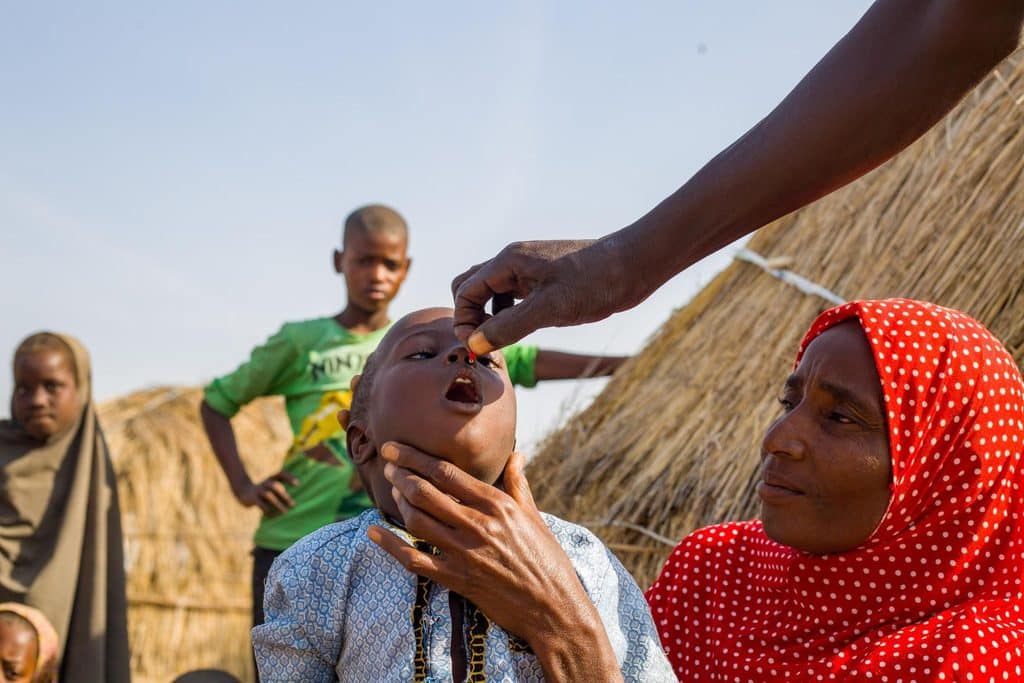
Our campaigns are also opportunities to provide families with other health services, like malnutrition screening or deworming. Why is that important?
Vitamin A campaigns are powerful platforms. Last year, we reached around 47 million children, which creates an opportunity to deliver other essential services at the same time, thereby improving efficiency.
Depending on the country, these can include deworming medication, malnutrition screening, immunization catch-up or referrals, birth registration, or counseling on infant and young child feeding. In Nigeria and Cameroon, campaigns have also been paired with HIV testing and bed net distribution.
Integration starts with planning. We work with governments and partners to determine which services are appropriate, feasible, and safe to include. We also need to make sure that additional services don’t overload frontline workers or affect vitamin A coverage.
Once the services are agreed upon, integration requires coordinated planning, training, and supply chains so that every contact with a child can be used to identify and address multiple health needs safely and effectively.
Do our teams ever face reluctance or skepticism toward vitamin A during our campaigns?
Vitamin A has been around for decades and is largely accepted, but reluctance can still occur. When it does, it’s important to approach it with humility. When families decline, it’s not because they don’t care about their children’s health; usually, they just don’t have enough information.
That’s why communication is so important. Health workers should always explain what vitamin A is, why it matters, and what they are giving the child before administering it. If someone comes to your home and asks for your children in order to give them something unfamiliar, it’s understandable that a parent might be hesitant.
We need to keep communicating between health systems and communities. Ultimately, the goal is to make every interaction informative, respectful, and an opportunity to build trust.
Help put healthier futures within reach for all children.