‘I Felt Like I Had Seen Heaven’: Desmond Kamara Regains His Sight After Cataract Surgery
For nearly two years, 59-year-old Desmond lived in darkness.
The civil engineer from Tannihun had spent close to four decades supervising construction work across southern Sierra Leone. Known in his community as hardworking and independent, Desmond never imagined a routine day at work would change his life completely.
While carrying out official duties at a construction site, he got sand in his eyes. He immediately stopped working and washed them with clean water, hoping the irritation would pass. Months later, severe pain developed in his right eye. His vision gradually worsened until he became blind in that eye.
Within another nine to ten months, Desmond completely lost sight in both eyes.
“I felt my life had ended,” he recalls quietly.
A Leading Cause of Vision Loss in Sierra Leone
Cataracts occur when the clear lens of the eye becomes cloudy, causing blurred vision. Without treatment, they can cause vision loss and even blindness. Most often related to aging, they can also be caused by eye injuries, like the one Desmond experienced. Although cataracts are a leading cause of blindness worldwide, sight can often be restored through a relatively short surgical procedure that replaces the clouded lens with an artificial one.
A 2021 report on avoidable blindness in Sierra Leone has identified cataracts as the leading cause of blindness and severe visual impairment. Yet many people, especially those living in rural communities, face barriers to receiving timely care. These can include the cost of treatments, limited access to specialist services, transportation challenges, and the lack of information about where to find treatment.
Helen Keller Intl, in partnership with the Ministry of Health in Sierra Leone and the local health authorities, works to bring eye health services to underserved communities. Through community outreach, screening, referrals, and support for free cataract surgery, the program helps people with vision loss access the treatment they need.
In 2025 and 2026, Helen Keller supported the National Eye Health Program under the Ministry of Health in conducting 502 no-cost cataract surgeries, with support from the Cure Blindness Project, across five districts of Sierra Leone: Bombali, Bo, Moyamba, Western Area Rural, and Western Area Urban.
For those who receive treatment, the impact goes beyond restored sight. Regaining vision can mean renewed independence, the ability to return to work, stronger connections with family and community, and a better quality of life.
Losing His Sight and Independence
Blindness changed everything for Desmond.
He had lived with his wife for more than 10 years, but four months after he became completely blind, she left. With no children to support him, daily life became increasingly difficult. He also faced marginalization within his community, making his struggle even more challenging. Moving around the house required assistance from neighbors and community members.
Then, in late 2025, Desmond heard about free cataract surgeries being conducted in Moyamba District through an outreach campaign. During a visit to Tannihun, eye care workers met Desmond, screened him for cataracts, and referred him to the hospital for surgery.
A New Beginning with Restored Vision
When he arrived at the hospital, he joined nearly 47 people waiting for treatment.
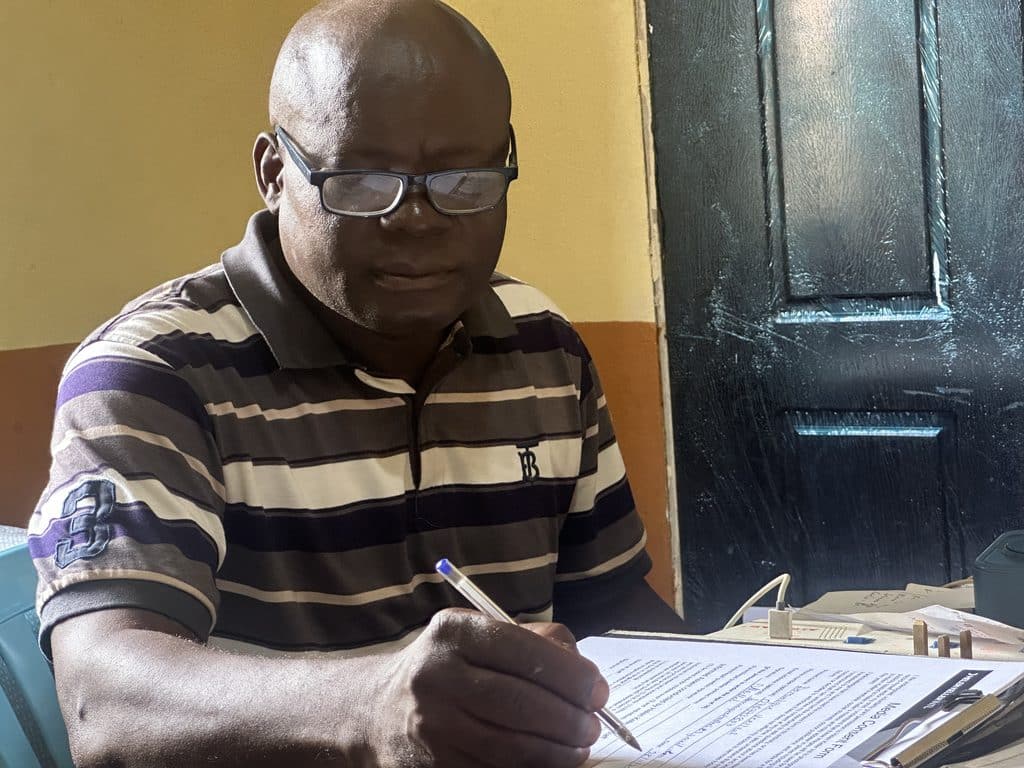
Out of an abundance of caution, the surgeons spaced out Desmond’s procedures over two days. His right eye was operated on first, then his left eye the following day.
The morning after the second procedure, Desmond slowly opened his eyes. Through a small opening in the bandage, the first person he recognized after two years of total blindness was Alusine, his neighbor and good friend’s 13-year-old son, who had accompanied him to the clinic.
“At that moment, I knew my sight was returning,” he says.
Later, when nurses removed the plaster and bandages completely, Desmond became emotional.
“I felt like I had seen heaven,” he says.
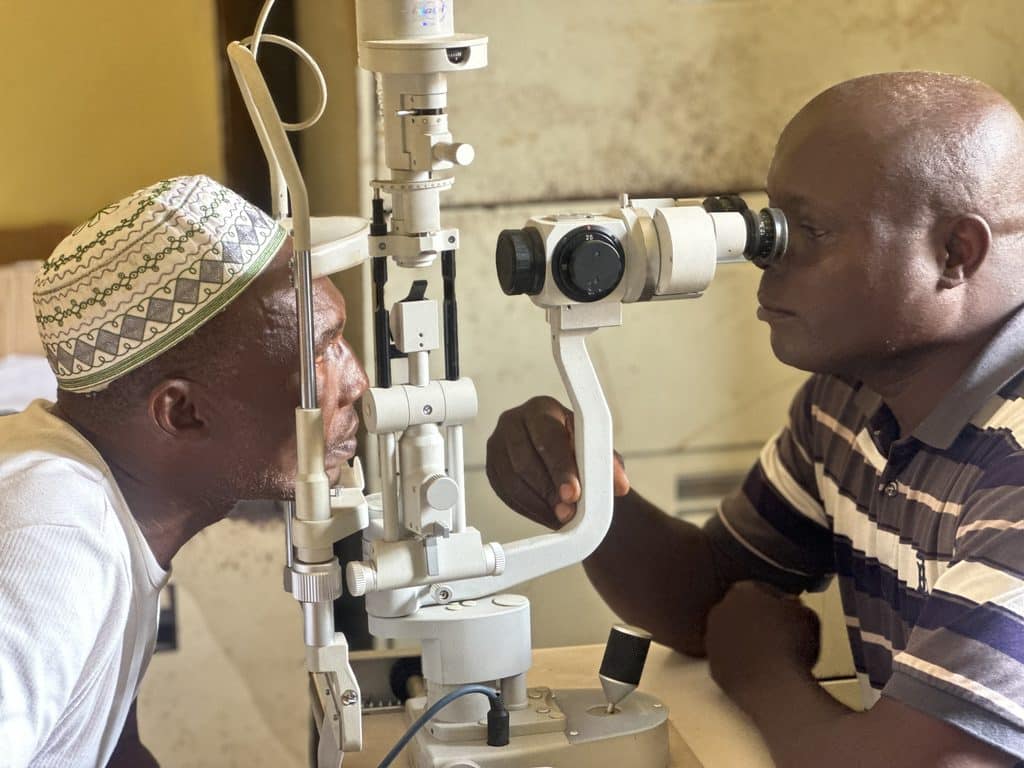
Doctors advised him to avoid heavy physical activity while his eyes healed. He was initially given 90 days of rest, but extended the recovery period to 180 days to allow himself more time to fully recover.
Dominique Veellaah, Eye Care Lead in Moyamba District, says the surgeries are transforming lives across communities.
“The impact of these free surgeries has been profound for [people we serve] and their families,” Veellaah says. “Many people had lost hope. Restoring sight gives them independence and confidence again.”
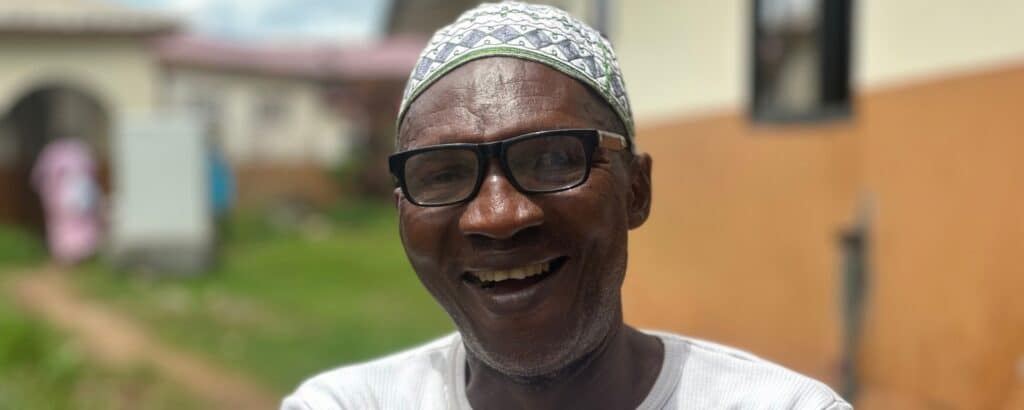
Today, Desmond is slowly adjusting to life with restored vision. He now spends his days reconnecting with neighbors, walking around his community again, and appreciating simple things he feared he would never see again.
He hopes this work continues so that others living in darkness can also regain their sight and independence.
Help all families around the world access vision care.