Nurturing Minds and Bodies in Sierra Leone
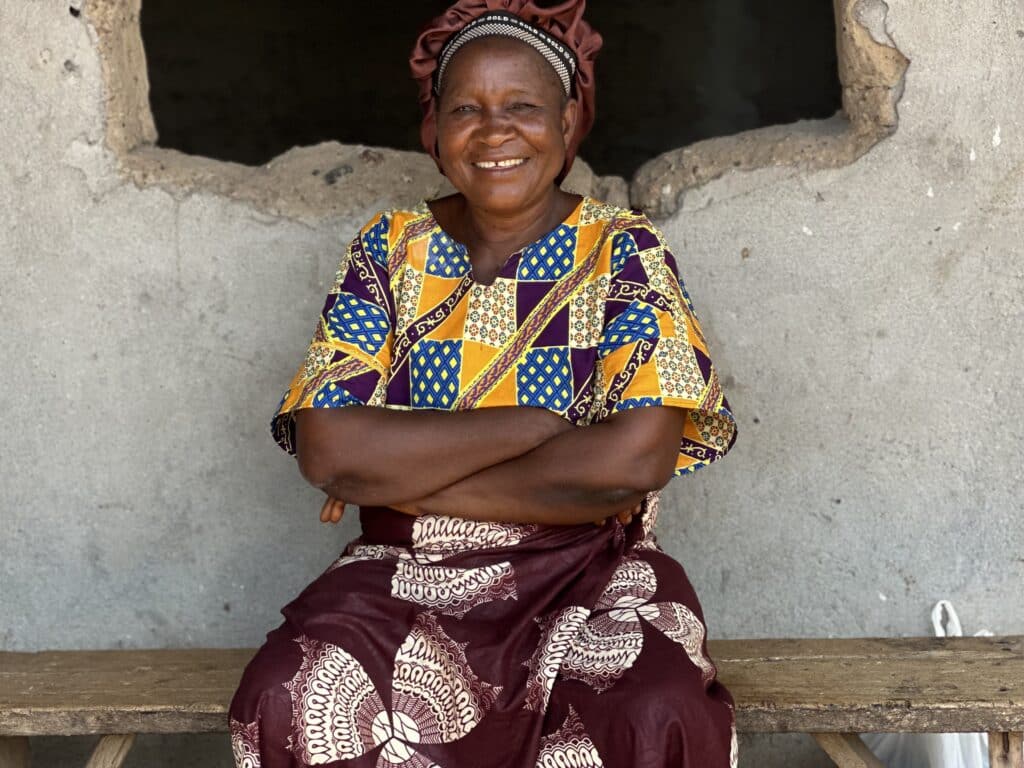
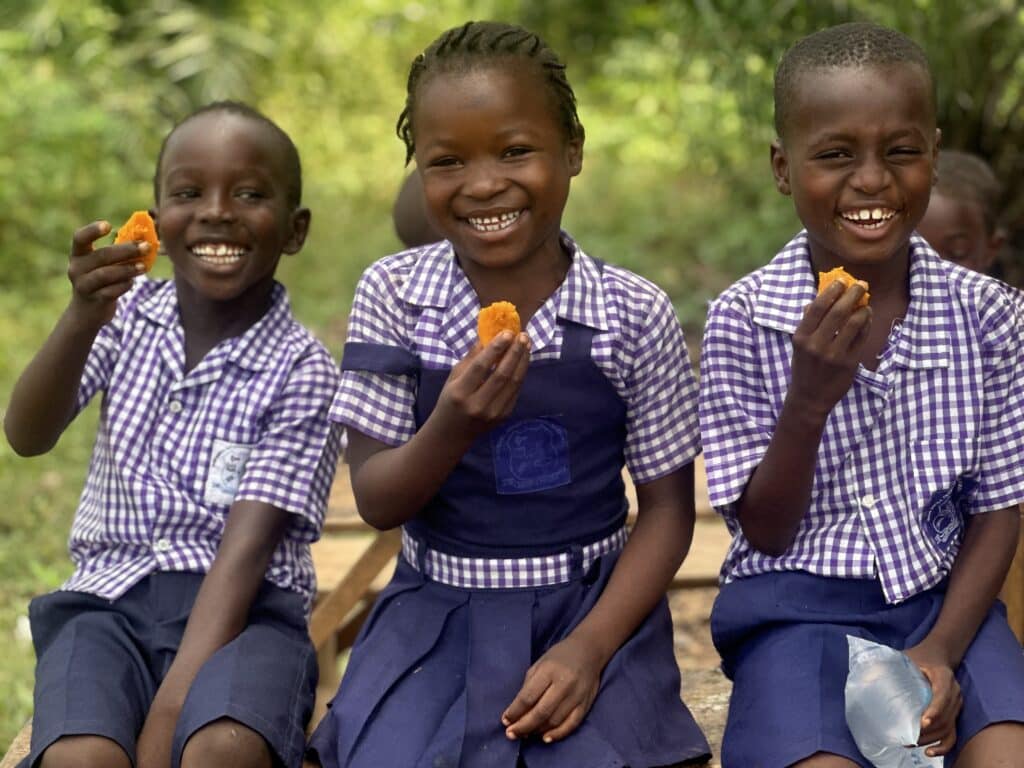
It’s Tuesday, and for the children at God’s Will Elementary School in Panlap, Sierra Leone, that means one delicious thing: orange-fleshed sweet potatoes for lunch. The students munch happily on their meal while their dedicated teacher, Sento, looks on. The students call her Aunty Sento, and she’s taught them something more valuable than any textbook lesson—how to grow the food that will keep them healthy.
“The [sweet potato] brings special joy to pupils and [to] us, the teachers,” says Aunty Sento. “We all enjoy growing and eating nutritious food.”
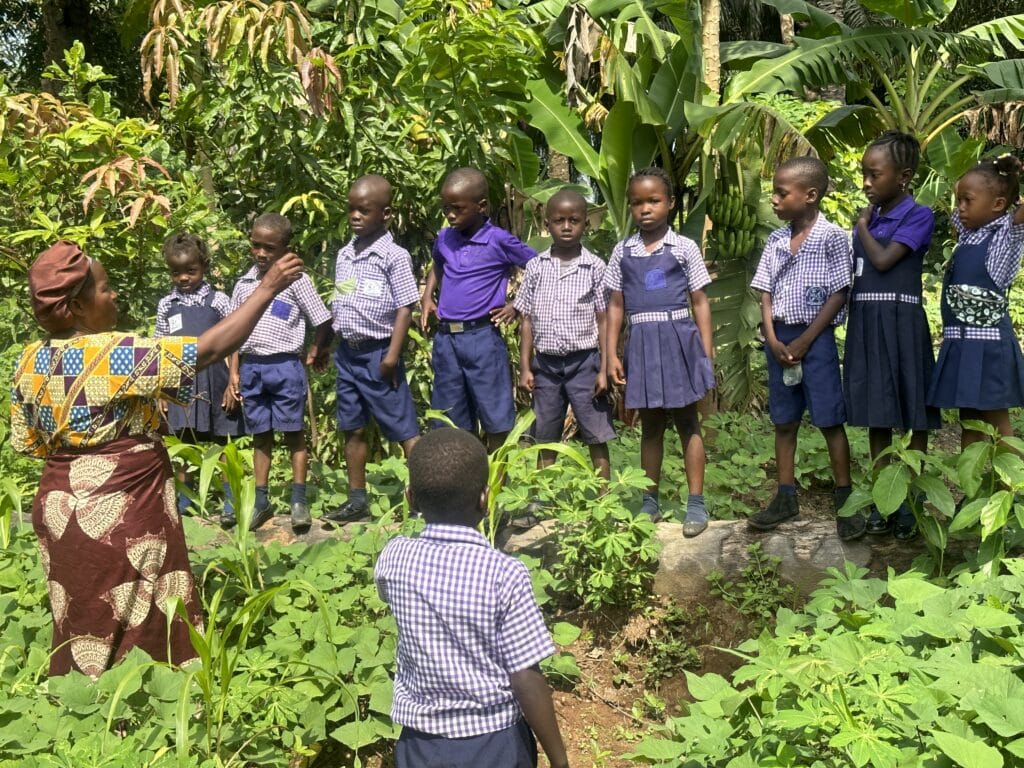
The children at this small school of about 100 students grew the potatoes themselves under Aunty Sento’s watchful eye. Sento leads the Tawaponeh Farmers Association, a group that collaborates with Helen Keller Intl to help grow more nutritious food and diversify diets in communities like Panlap. She’s helping bring her school to the forefront of local efforts to combat hunger and malnutrition through practical agricultural education.
77% of Sierra Leoneans lack reliable access to affordable, nutritious food, according to the World Food Programme. People in rural areas of the country depend mainly on what they can grow themselves, which often includes rice and cassava. While these crops are filling and easy to grow, they are low in essential nutrients that children need, such as vitamin A.
Vitamin A is an essential nutrient to safeguard children’s immune systems and vision, as well as protect their lives. While abundant in eggs, leafy greens, carrots, and dairy, these are not ingredients commonly found in African diets. Enter the mighty, orange-fleshed sweet potato, rich in vitamin A and other nutrients.
“They call it a magic crop,” explained Lansana Sesay, Field Officer at Helen Keller Sierra Leone.
A School That Feeds Itself
Under Aunty Sento’s leadership, community members in Panlap have found their own solution to keeping children healthy. Sento imparts agricultural knowledge to her students and guides them in growing sweet potatoes—students learn by doing, after all.
Aunty Sento’s enthusiasm has caught on. Students, parents, and teachers invest extra hours on the weekends to plant the seeds of sweet potato knowledge in young minds.
“The infants are usually taken to the field so that they can learn through observation what the older children are doing,” Aunty Sento remarks.
For Aunty Sento’s students, the lessons go far beyond a delicious and nutritious lunch. After the potatoes are harvested and used for school lunches on Tuesdays and Fridays, the school sells whatever is left over. The funds help families purchase school materials such as books, pencils, and uniforms. The students are learning that they have the power to solve their own challenges—one sweet potato at a time.
This initiative has had a profound impact, offering local solutions to address hunger and malnutrition. Through this generous support of donors like you, in the last year more than 2,600 farmers like Aunty Sento have received climate-smart training and tools to cultivate crops like orange-fleshed sweet potatoes, creating lasting change for their communities.
Help children and families get the nutrition they need to thrive.