From Uncertainty to Predictability: How a Small Business Owner Learned to Thrive Again
Thirty-year-old Jummai starts her mornings preparing food for the small business that sustains her household of six. But life has not always been so predictable for her.

Jummai became head of her household in Fufore, Nigeria, at a young age. Her father passed away when she was young, and her mother died when she was 20, leaving her to care for two younger siblings, her son, and two elderly sisters. To feed her family, Jummai began selling boiled yams and rice. Unfortunately, her daily earnings from this work were inconsistent and often too little to meet her family’s needs.
“There were times I could not afford even the basics,” Jummai recalls. “Sometimes, I had to use the little profit from selling food just to settle debts.”
Eventually, Jummai was forced to close her business, leaving her family with few options to sustain themselves. But soon after, she had the opportunity to receive training and support from Helen Keller Intl, focused on supporting the nutritional needs and livelihoods of both displaced families and the communities that host them, like Jummai’s home of Fufore. She participated in training on income-generating activities, community savings groups, and home gardening. Crucially, she also received a package to help restart and expand her food business, as well as seeds and tools to begin a home garden.
Growing Malnutrition in Nigeria
Ongoing violence, climate crises, the rising cost of food, and funding cuts for global aid have put 35 million people living in Nigeria ‒ roughly one in seven ‒ at risk of hunger in 2026, with 3 million children facing severe malnutrition. The number of people facing malnutrition has grown by 10 million since 2024, as violent conflict continues and more people like Jummai are unable to access consistent, nutritious food.
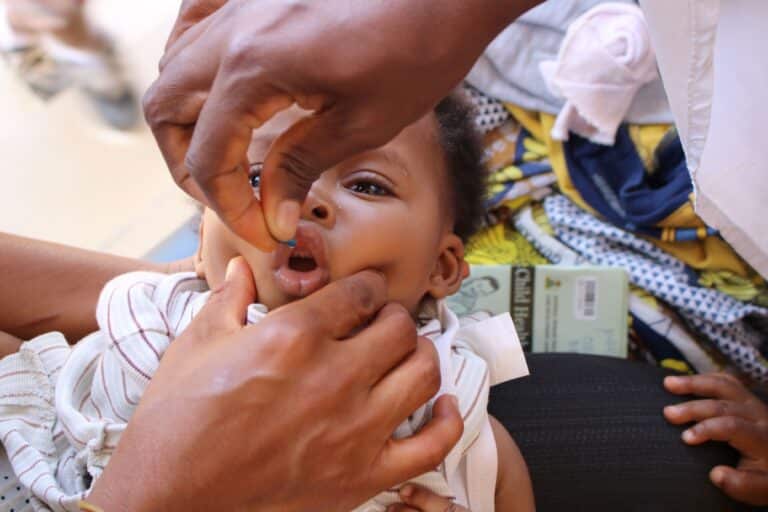
That’s why this program, supported by The Church of Jesus Christ of Latter-day Saints, is so critical ‒ it equips women with the skills, tools, and financial support they need to thrive. For over 30 years, Helen Keller has worked with women in Africa and Asia to help them grow nutritious foods for their families and build businesses using sustainable, climate-smart techniques. In Nigeria, Helen Keller works with the Church in Nigerian communities hosting displaced people, including Fufore, to improve nutrition for women and children with education, malnutrition screenings, and training and resources like Jummai received.
Learning to Stand Again

The program’s potent combination of training, savings, and new equipment gave Jummai the confidence to steadily grow her business. Today, Jummai earns between $5 and $8 daily, enabling her to purchase bags of rice to scale up her commercial rice farm, secure fertilizer, and hire labor.
“I do not want to fail in my commitment to my family,” Jummai confides. “That keeps me focused on improving my life.”
With her new income, Jummai can again support her family and has enrolled her son in school. The stress that once defined her life has eased, replaced with a sense of direction and momentum that Jummai built herself. She is now a source of encouragement to other women in her community facing similar challenges.
Savings have also become a part of Jummai’s routine as an active member of her local village savings and loan association. The group convenes community members to pool small amounts of money, creating a shared fund from which members can take out small loans, as Jummai has done for her own business.
“I never imagined I could receive this kind of support,” Jummai shares. “It made it possible for me to stand again.”

Looking ahead, Jummai hopes to increase her farm’s yield with a larger plot of land to produce more crops each season. This will help support her family even more, grow her farm business, and continue selling food as a local vendor.
“I believe this project is a powerful opportunity,” Jummai says. “It has renewed my hope and given me a chance to rebuild my life. With what I’ve accomplished, I’m confident I can support my family and build a brighter future for everyone.”
Help women like Jummai learn to thrive again.