Speaking Technically: A Chance to Grow and Thrive Thanks to Vitamin A

We recently spoke to Romance Dissieka, Monitoring, Evaluation, Accountability, and Learning Coordinator for Helen Keller Intl’s vitamin A work. Part of a multi-national team, Romance leads efforts to gather and use data to help reach over 40 million children across 14 African countries with vitamin A.
Trained as a doctor, Romance began her career as a clinician providing direct care to patients. She joined Helen Keller to help prevent, rather than treat illnesses ‒ using proven, cost-effective nutrition interventions that help millions of children grow up healthy.
With recent cuts to nutrition funding, why is vitamin A supplementation so important?
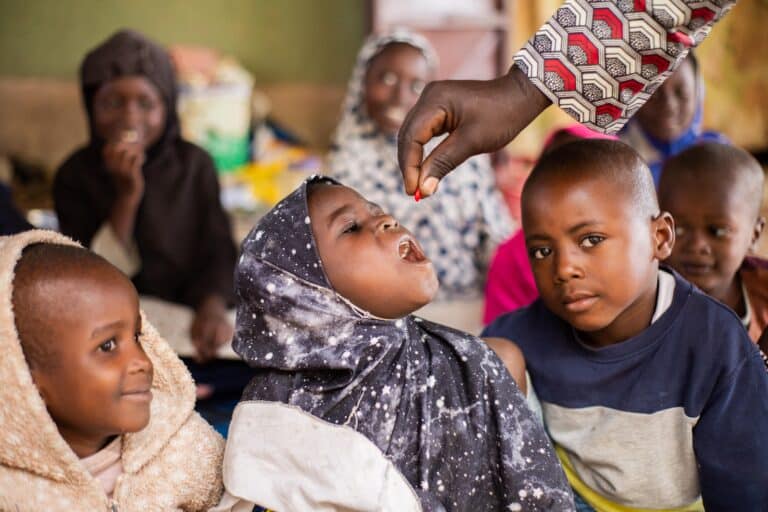
In today’s climate, prioritizing the most cost-effective, high-impact interventions is more critical than ever. Vitamin A supplementation stands out because it saves lives on a large scale. Research shows it can reduce child mortality by 12‒24% making it one of the most powerful public health tools for protecting vulnerable children.
As food insecurity and pressures on health systems increase, children will be more exposed to preventable illnesses. Vitamin A is key in boosting immunity and protecting against common childhood infections that can quickly become fatal.
We reach kids with vitamin A through two delivery models: campaigns and routine. Can you tell us about the difference between these two models?
For many years, vitamin A was primarily delivered through large-scale campaigns, often alongside national polio immunization days. These twice-yearly campaigns concentrated resources over a few intensive days to provide rapid, widespread coverage and leveraged the strong polio eradication infrastructure.
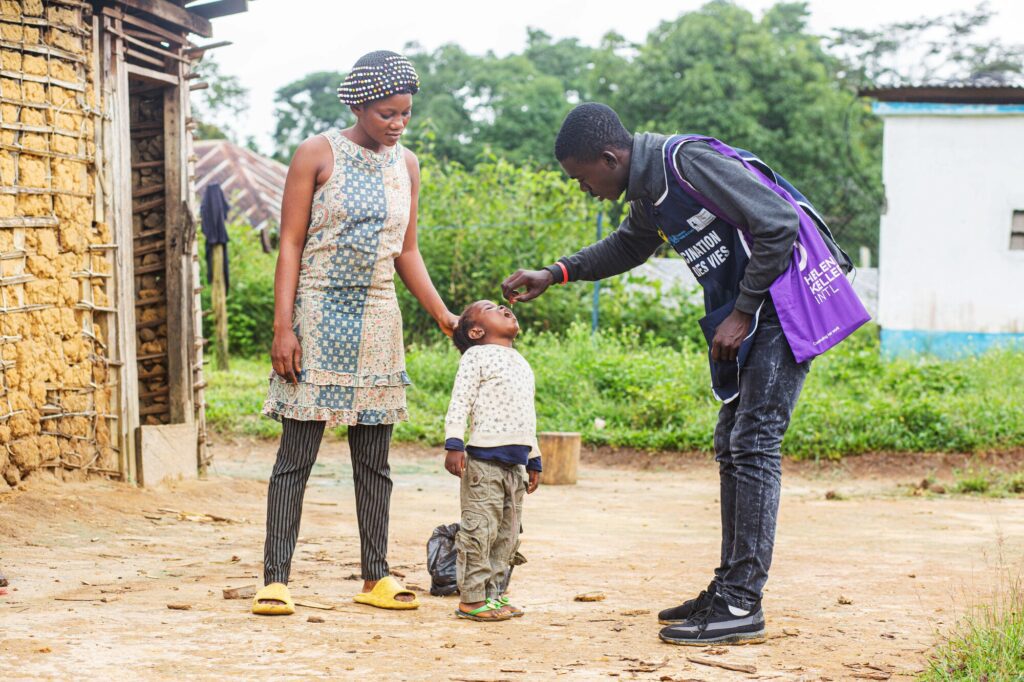
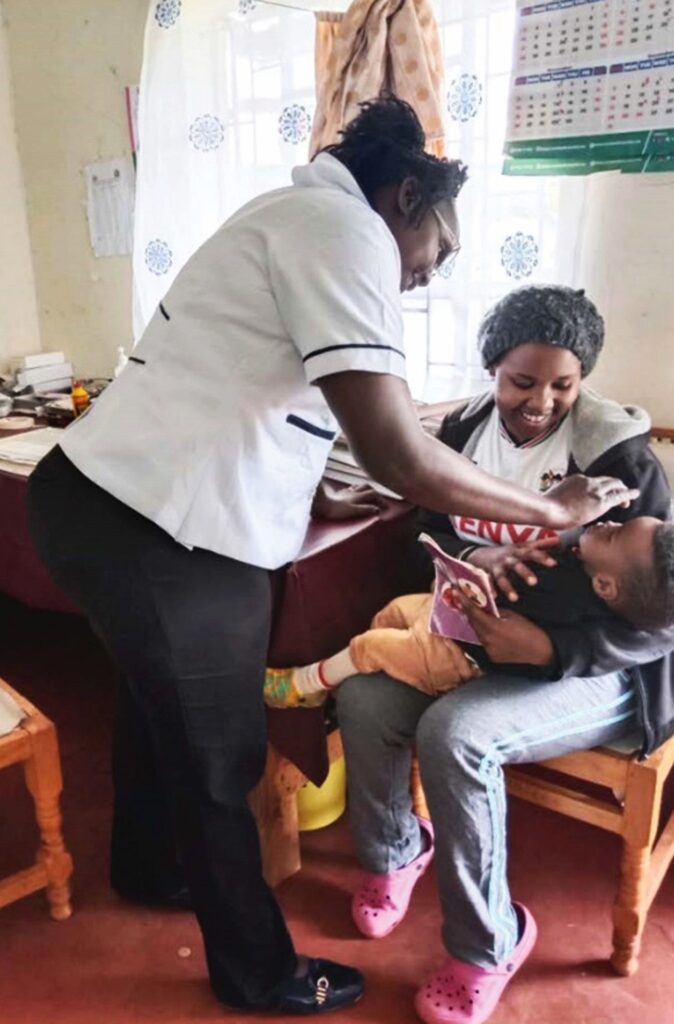
This approach was particularly effective in areas with weak health systems. But with polio eradicated in most African countries, those mass campaigns are winding down, and we’re shifting toward routine delivery. Instead of health workers going to a child’s community, a child receives vitamin A twice a year through regular health system touchpoints – routine immunizations, growth monitoring, checkups, antenatal care, and other scheduled visits.
What are some of the advantages of transitioning to a routine delivery model? What about the challenges?
For advantages, routine delivery strengthens an existing health system, builds trust in providers, and reduces reliance on costly campaigns. It also creates a more holistic approach to health by aligning with nutrition counseling, immunizations, and malaria prevention, and can provide more equitable coverage across communities.
The biggest challenge is maintaining a coverage rate of 80% or more. Campaigns go door-to-door to reach every child under five. Achieving similar coverage through routine care in remote places is more difficult. It also requires long-term, predictable funding.
The transition is complex; however, if done thoughtfully, it will lead to more resilient health systems that protect more children over the long term.
How are we ensuring that we continue to reach children during this transition, especially in hard-to-reach places?
It’s a gradual process, and community awareness is a huge piece. Routine services don’t have the same visibility as big campaigns. Families may not realize that vitamin A is still important and prioritize it unless there’s strong community outreach.
We’re engaging local partners to support community mobilization and awareness-raising efforts. In addition, we’re working with health systems to strengthen service delivery ‒ especially at the community and primary health care levels ‒ so that vitamin A is reliably available.
We have introduced monthly self-monitoring of routine delivery so we can closely track performance, quickly identify gaps, and respond effectively to maintain and improve coverage. These data and insights help us continue to adapt to strengthen and scale up routine delivery.
How are we able to reach more than 40 million children a year?
It’s a remarkable achievement, made possible by strong partnerships, community-based strategies, and highly efficient delivery systems.
Meticulous planning, coordination, and training are key to ensure no child is missed. We collect real-time campaign data, on coverage and stock availability enabling quick adjustments to reach even the hardest-to-reach populations.
We also rely on hundreds of thousands of trusted community health workers to deliver vitamin A directly or help families access health facilities. Their relationships ensure high participation and trust.
Finally, we have strong support from donors and partners like GiveWell, UNICEF, and national governments, who provide funding, expertise, and leadership.
Tell us about your Helen Keller journey. What motivates you to do this work?
I began my career as a doctor, providing direct patient care. It was deeply rewarding, but I could only treat one patient at a time. My patients often had preventable illnesses, and I realized I could have a broader impact working on prevention and public health, which led me to Helen Keller.
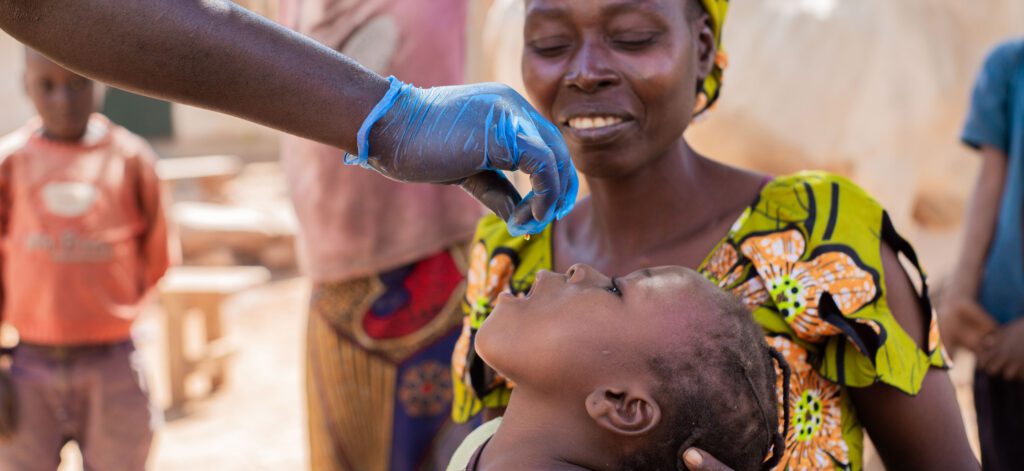
What motivates me every day is knowing that our work translates directly into stronger, healthier futures for millions of children. We’re not just delivering a vitamin A capsule – we’re giving children a real chance to grow, thrive, and reach their full potential.
I am inspired by the tangible results and the spirit of Helen Keller herself, who taught us about overcoming barriers and that everyone has the potential to change the world. In the end, it’s simple: Every child deserves a fair chance at life. That’s why I chose this path and do this work.
Help ensure good nutrition for all children.