Looking Bravely: Restoring Vision and Possibility in Tanzania
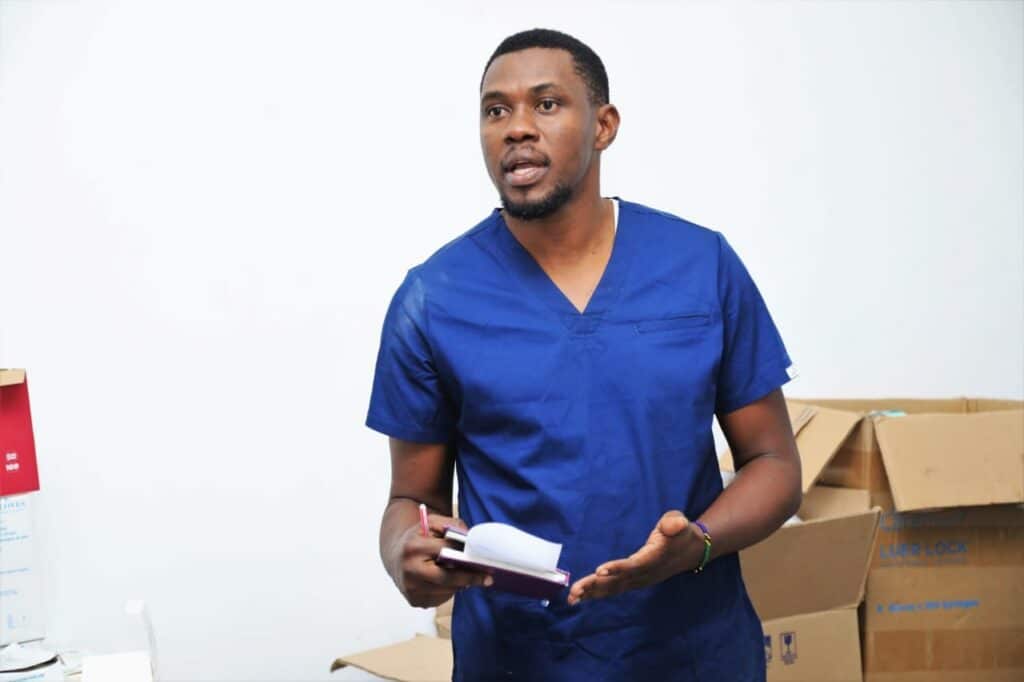
Based in Dar es Salaam, Athuman Tawakal leads our eye health work in Tanzania, tackling both trachoma and cataracts. We recently spoke with him about how Helen Keller effectively combines screenings for both diseases to reach more people and transform the lives of thousands each year.
Helen Keller is working to eliminate trachoma and treat cataracts in Tanzania. For those unfamiliar, how do these conditions affect people’s health and daily lives?
Trachoma is the leading infectious cause of blindness worldwide. It spreads through flies and close contact and today, it mainly occurs in communities with water scarcity and poor sanitation. People are often infected at a young age, and with repeated exposure, the disease can advance to trachoma trichiasis, causing eyelashes to turn inward, scratch the cornea, and leading to blindness and severe pain. Beyond vision loss, it affects people’s ability to work, care for their families, and manage daily life.
Cataracts occur when the lens of a person’s eye becomes cloudy. If untreated, cataracts gradually reduce vision and can eventually cause irreversible blindness severely limits people’s independence and opportunities. Major causes include aging, eye trauma, diabetes, prolonged smoking or alcohol use, and excessive sun exposure.
Take us through the process of diagnosing and treating trachoma: from door-to-door screenings to surgical intervention.
The process begins by planning with our partners and government regional leaders. Case finders must be identified and trained. They must have good eyesight, be willing to serve, and be able to read and write to document their work. Each case finder is assigned a sub-village and spends about a month screening all residents aged 15 and older, the age group most likely to have trachomatous trichiasis. Once they complete their door-to-door visits, they submit records of households visited, people screened, and suspected cases, which are verified by local leadership.
Next, trained eye-care professionals conduct confirmatory screenings across a district using the case finder’s records. Confirmed cases are referred to outreach camps to receive corrective surgery, while other eye conditions are treated with medication. At the camp, surgeons assess each patient and determine a treatment plan. Minor cases may involve plucking eyelashes, while complex cases require eyelid surgery. 99% of patients experience significant improvement.
Our goal is to eliminate trachoma by 2030, and we know we are making good process, because we continue to find fewer and fewer cases of trachoma during our community screenings. However, elimination requires more than treatment alone—we must also prevent future infections. To do this, the Ministry of Health provides preventive medicine through mass drug administration in areas where trachoma remains endemic and supports infrastructure projects that improve access to clean water, reducing the risk of infection.
Recently, Helen Keller started to combine cataract and trachoma screenings. How does this help us reach more people effectively?
We’ve been working towards eliminating trachoma for many years, but while conducting trachoma trichiasis community screenings, we kept encountering people with cataracts. They would tell us, “I cannot see.” We would explain that they had cataracts, but at that time, we had no way to assist them. We knew we needed to expand our services because even if we addressed all cases of trachoma, many people would still go blind due to cataracts.
In 2022, we launched a pilot integrating cataract case finding alongside trachoma trichiasis in the same areas. Case finders were trained to identify both conditions during a single household visit. Those who were found to have cataracts were referred for surgical care. At our first cataract outreach camp, we provided 292 cataract surgeries in just six days.
The successful pilot gave us confidence to utilize this integrated model everywhere. After all, our case finders were going to the same communities, seeing the same people and the same eyes. Combining the screenings is a cost-effective way to help more people. Today, our high-quality, high-volume cataract camps allow us to treat a huge number of patients, performing more than 700 cataract surgeries in the span of six days.
Our integrated model has strengthened community trust and turnout, improved the cost-effectiveness of our work, and built local capacity by enhancing community health workers’ skills. Cataract treatment brings immediate results: people go from being unable to see to seeing, and they return to their communities and share their experiences, skeptical community members who previously declined care come forward for treatment.
Is there a patient story from one of our treatment camps that has stayed with you?
I met a 14-year-old girl named Juta Jilongo who had lost her vision due to trachoma. She couldn’t go to school, and her family didn’t know how to help. Luckily, we were able to support her with treatment. A few months later, when our team checked in on her recovery, I almost didn’t recognize her. She ran up to greet us and seemed like an entirely different person. Before, she was shy and withdrawn, but after her surgery, she became active, returned to school, and reconnected with friends. Her story reminds me that our work doesn’t just restore vision, it restores possibility. In her case, it completely transformed her life and potential.

Help all families around the world access vision care.