Speaking Technically: Supporting Healthy Pregnancies with a Simple, Powerful Prenatal Vitamin
Good nutrition is essential for a healthy pregnancy. Yet in many countries where we work, women begin pregnancy with micronutrient deficiencies, which can increase the risk of complications. A daily prenatal multivitamin—also known as multiple micronutrient supplementation—can make a world of difference in supporting a healthy pregnancy by filling nutritional gaps.

Across Africa and Asia, Helen Keller Intl is working to expand access to multiple micronutrient supplementation by supporting research, policy advocacy, and health systems strengthening. We recently spoke with Kristine Garn, Nutrition Advisor and Coordinator, who supports our nutrition projects across Africa, to learn more.
What is multiple micronutrient supplementation, and why is it important for pregnant women?
It’s a daily, comprehensive prenatal vitamin containing 15 essential micronutrients, vitamins, and minerals that support healthy pregnancies for moms and babies. It’s especially recommended in places where expectant mothers are underweight and face high levels of anemia due to poor nutrition. When taken daily, starting in the first trimester, these vitamins have been shown to reduce the risk of low birth weight and stillbirths.
There’s also extensive evidence that women prefer these prenatal vitamins over iron-folic acid, which has historically been the standard of care. Women report fewer side effects and recognize that it’s more beneficial for both themselves and their babies. And yet, despite so much evidence of the positive benefits, access remains a serious challenge. The system is failing pregnant women due to supply chain constraints, financing gaps, and, in some cases, limited health system capacity, but we’re working to change that.
Take us behind the scenes: what does it take—in terms of research, advocacy, and investment—to bring these vitamins to more pregnant women? How does the roadmap differ, or stay the same, from country to country?
We have this theoretical model for how to expand access to prenatal vitamins: you start with advocacy building on existing global evidence, then you produce contextualized evidence around acceptability and adherence, then you integrate the vitamin into the national health systems, and finally, you start rolling it out. Those are the “standard” steps that a country follows when building a roadmap. But that’s just not always what happens. What we’ve seen is that each country goes about this in a different way, depending on context and the funding opportunities.
What role does Helen Keller play in bringing prenatal vitamins to scale in the countries where we work?
We support a wide range of activities, depending on the context. In Nigeria, for example, we’ve supported the development of the roadmap, training tools, and cascade trainings down to the community health worker level. We’ve also supported procurement, integration into national supply chains, and the development of monitoring systems.
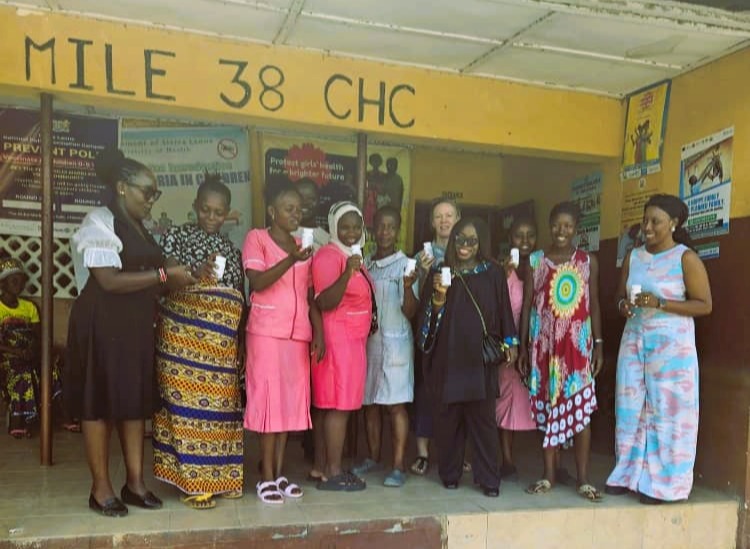
In Sierra Leone, we’ve been the go-to partner from the outset, involved in nearly every part of the journey. In other countries, our role can look a bit different, but wherever we work in Africa, it is always with and through existing national health systems, and in close partnership with the government. That’s central to how we approach health system–based interventions.
In Senegal, we recently launched a willingness-to-pay study. What is the significance of this study?
This type of study is the first of its kind for multiple micronutrient supplements and for Helen Keller. It investigates pregnant women’s willingness to pay for these vitamins and came about through a conversation with the government, their partners, and The Eleanor Crook Foundation, who’s funding this work. It’s important because in Senegal, women are currently paying for iron-folic acid tablets, which is different from many other countries where we work, where it is provided for free.
As global health funding constricts, more services may shift to fee-based models. So, it is important to understand what women can pay, along with the drivers and barriers behind that. While out-of-pocket payment is not something we typically advocate for, it is important to be prepared. This research will give us clear data from Senegal and a model that can be adapted in other settings across the region.
What is also exciting is that this is a two-phase approach. The willingness-to-pay study will inform a large-scale randomized control trial to assess uptake, acceptability, and adherence, which are key indicators for success. So, it’s not only innovative, but also responds to critical information needs and can inform similar work beyond Senegal across the region.
Are there any recent success stories of partner countries expanding access to prenatal vitamins you’d like to highlight?
I am very impressed by Sierra Leone. Globally, they have been among the frontrunners in their willingness to take on prenatal vitamins. They have fully integrated them into the health system and reached scale within a relatively short period of time and are the first lower-to-middle-income country in Africa to do so. It is especially impressive given the resource-constrained environment and speaks to the government’s commitment and health system providers’ willingness to adopt this new intervention and deliver it to pregnant women. I think it is a huge achievement, and it has been very much driven by our local colleagues there who have really championed this. So, despite the broader challenges, there is a real cause for optimism.
Help us support good health and nutrition for all moms and babies.