One-Stop Eye Care Services Provide Clear Vision for Garment Workers in Bangladesh
Moshammat Rojina Begum’s eyes had been bothering her for days, making it difficult to complete her work at a garment factory in the suburbs of Dhaka, Bangladesh.
“Over the last few days, I’d experienced dizziness, watery eyes, and red eyes at work,” she says.
For the past twelve years, Rojina has worked as a yarn-spinning assistant at Tarasima Apparels Limited, a manufacturer of ready-made apparel in the Manikganj District outside the capital. Rojina’s work, cutting yarn, is an important part of the garment-making process and requires close attention to detail, making clear vision essential.
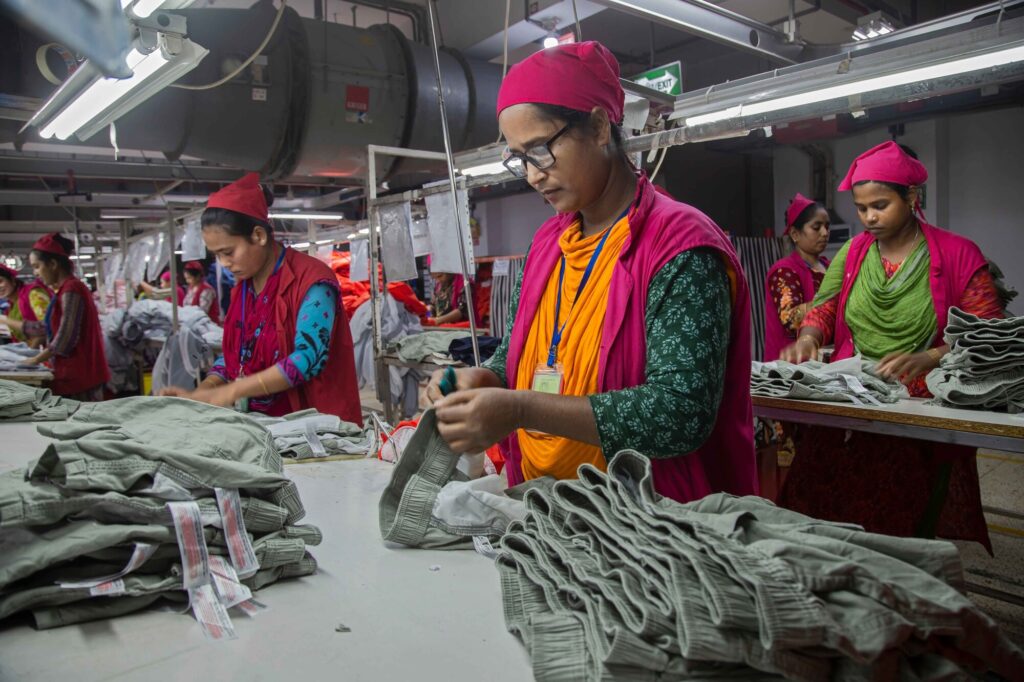
She had visited a local eye hospital for a vision screening, but it was both costly and time-consuming. Rojina was unable to purchase glasses or go for follow-up visits because they were too expensive. Without glasses, her vision continued to deteriorate.
Rojina and her family had moved from their village for better economic opportunities, and now her impaired vision could put her income at risk. Then, she mentioned her vision issues to the factory’s internal medical assistant. She referred Rojina to the factory’s new one-stop eye healthcare service center established by Helen Keller Intl. The location on the factory grounds made it easy and convenient for Rojina to visit the center.
Partnerships Support Eye Health for Garment Workers
The garment manufacturing industry is a vital sector for Bangladesh’s economy, and ready-made apparel is a major export for the country, with women making up the majority of garment workers. Globally, women are also disproportionately affected by preventable vision loss and often face barriers to accessing vision care. This is true for Bangladesh, too. For example, more women suffer from refractive error, a condition in which the shape of the eye prevents light from focusing directly on the retina, leading to blurry or distorted vision.
In Bangladesh, eye care services and prescription glasses can be difficult to access and expensive, particularly among people experiencing poverty. Without clear vision, adults may struggle to complete their education or earn an income. Work requiring fine precision, such as garment manufacturing, is particularly challenging for individuals with poor vision. In fact, garment workers in Bangladesh with vision impairments earn less than those with clear vision, and a simple pair of prescription glasses can help increase productivity, income, and quality of life.
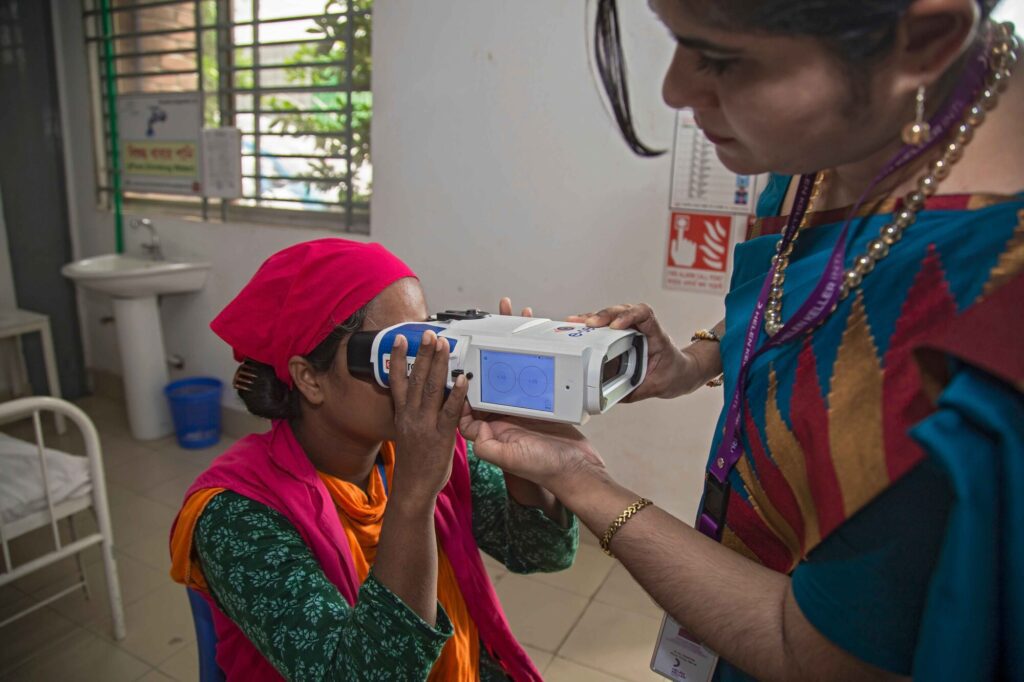
Helen Keller has partnered with the Bangladesh Garment Manufacturers and Exporters Association and garment factories to provide accessible, comprehensive eye care for garment workers. By offering a one-stop center for eye care at five large garment factories, the partnership aims to improve the eye health of garment workers, thereby enhancing their overall well-being and contributing to increased productivity. Bangladeshi nongovernmental organization KHEA Foundation also provides prescription glasses to those in need at a discounted price.
Since September 2023, these centers have provided refractive error screening for 12,000 garment workers, and more than 800 have received prescription glasses. Helen Keller has also provided nutrition education sessions for 30,000 workers, providing information about the importance of eating vitamin A-enriched foods and practicing proper eye care to prevent blindness.
Boosting Well-Being and Productivity
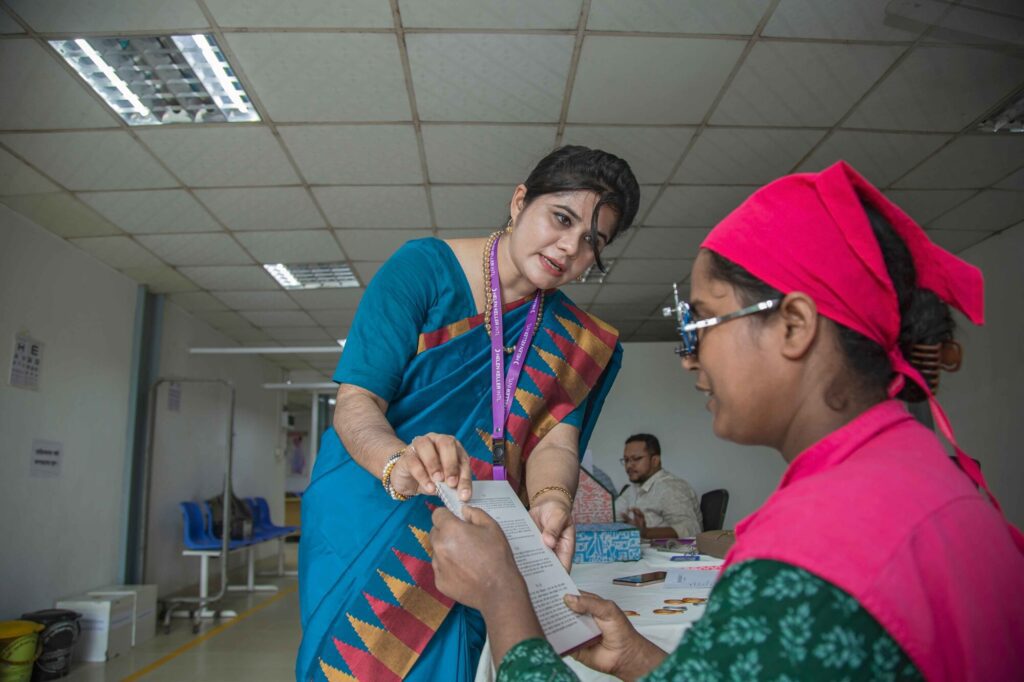
At the center, an ophthalmologist provided a thorough, no-cost vision screening and gave Rojina a prescription for eyeglasses. She took her new prescription to the Eyeglasses Corner at the factory, where she was able to purchase a new pair of glasses at a discounted price.
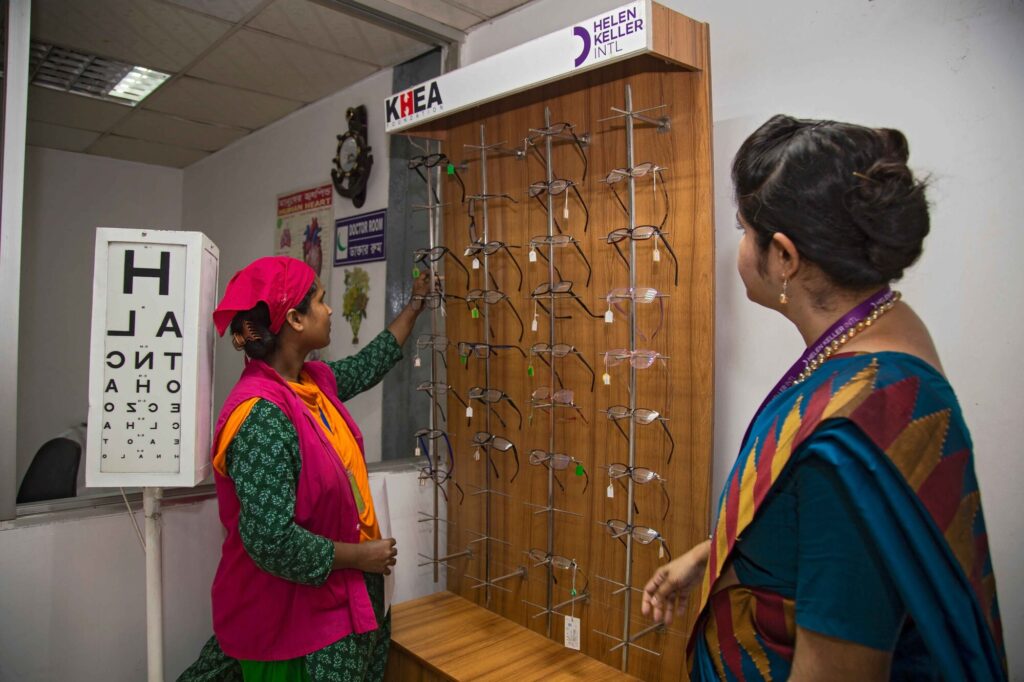
“This eye healthcare service point is extremely efficient and convenient for us,” says Rojina. “We no longer have to visit an outside eye specialist or eyeglasses shop.”
For those with eyesight issues, like Rojina, the eye care center makes it easy to receive the vision services they need. Routine eye check-ups and access to discounted eyeglasses have helped workers become more efficient in their jobs and reduced workplace absences.
Rojina hopes that one-stop eyecare services will encourage other staff to seek timely treatment for their eye problems. She says, “Many of my coworkers appreciate that we get screening services and glasses within the factory premises. This has helped us save time and money and boosted our productivity and confidence.”
Help ensure access to vision care for all children and families.